It is made from a dark purple berry called ‘acai’; it is mixed with liquids like coconut water or fruit juices to get that creaminess. Toppings like granola and fruits are added at the end.
What Is an Acai Bowl? Nutrition, Recipe & Health Benefits
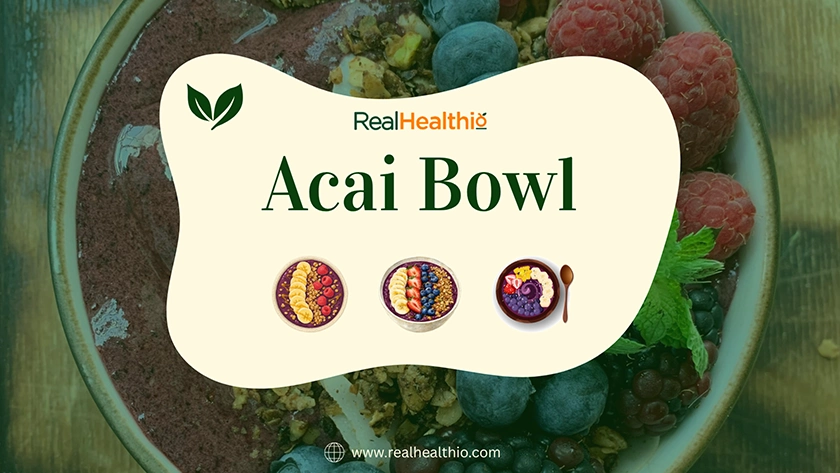
Acai is a dark purple berry that is used to make thick smoothie bowls, which have a completely different consistency from a smoothie. These bowls are then topped with fruits and granola for fibre and protein. Acai was originally an everyday food item consumed by the people of Brazil until it became popular worldwide as a healthy breakfast option.
This guide thus answers all the questions you might have, from what an Acai bowl is to how to make one for yourself at home that is just as good as one you would get at a cafe. This will also give you an honest and clear look at whether this bowl is just another trend or if it actually lives up to its healthy reputation.
Quick Answer
An Acai bowl is a dark-purple berry used to make a thick, smoothie-like bowl made with blended frozen acai, berries, bananas, and various toppings. Typically consisting of 200-500+ calories, it is a nutritious choice and can be simply made at home by blending frozen berries, bananas, and milk, and finally topping with granola, seeds, or fruits.
Table of Contents:
- What is an Acai Bowl and Where Does It Originate From?
- What Is Acai?
- What Is an Acai Bowl Made Of?
- Acai Bowl Calories and Nutritional Benefits
- Are Acai Bowls Actually Healthy Or Is It Just Another Trend?
- How to Make an Acai Bowl at Home?
- What To Check If You Want an Organic Bowl?
- How To Achieve The Perfect Consistency And Texture?
- Mistakes to Avoid While Making an Acai Bowl
- Conclusion
- FAQs
What is an Acai Bowl and Where Does It Originate From?
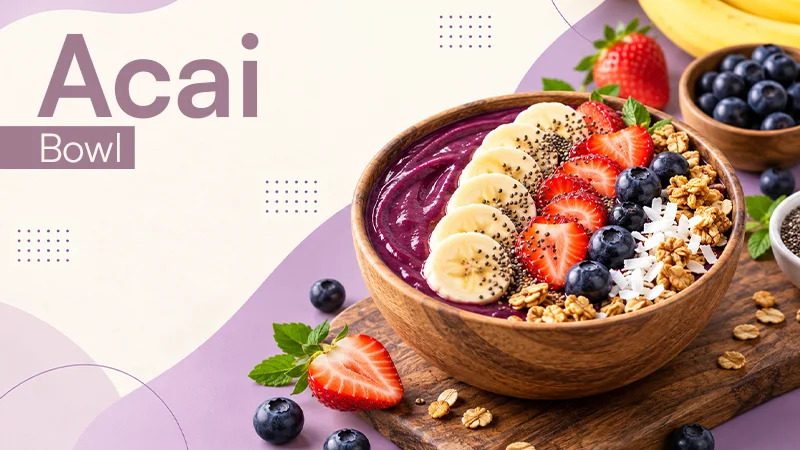
An Acai bowl is a thick, spoonable blend made by combining frozen Acai berry puree with fruits – typically bananas- and a dash of liquid. It is then finished with different types of toppings such as granola, fresh fruit, coconut, and seeds.
Unlike a smoothie, it is dense in consistency and resembles more of a frozen dessert, and thus these cannot be consumed through a straw – a spoon is recommended.
Acai bowls have their origins in the Cabocla communities of the Brazilian Amazon, where these were a staple food item for the population. The bowl format then moved to Rio de Janeiro’s surf culture, where it gained popularity, before moving more globally across cafes.
What Is Acai?
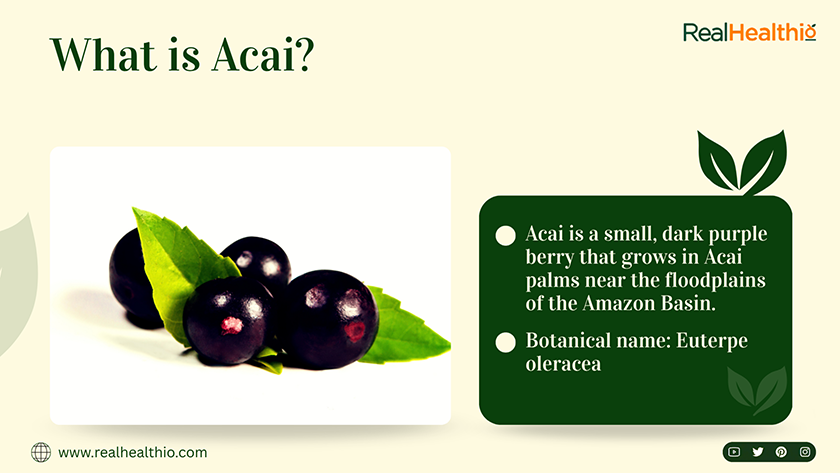
Grown in dense clusters on the Acai palms near the floodplains of the Amazon Basin, Acai is a small, dark purple berry. It was botanically named Euterpe oleracea, which translates to edible inner core, which means that even though the berries resemble grapes in size, only a small part – a large seed at the centre is edible.
It is sometimes also referred to as ‘palm berries’ in different regions because of its palm origin and not due to a different variety of the berry. These berries are highly perishable, and so they lose their nutritional value within a few hours of the harvest. This is primarily the reason why it is sold outside Brazil and is always frozen or freeze-dried.
What Is an Acai Bowl Made Of?
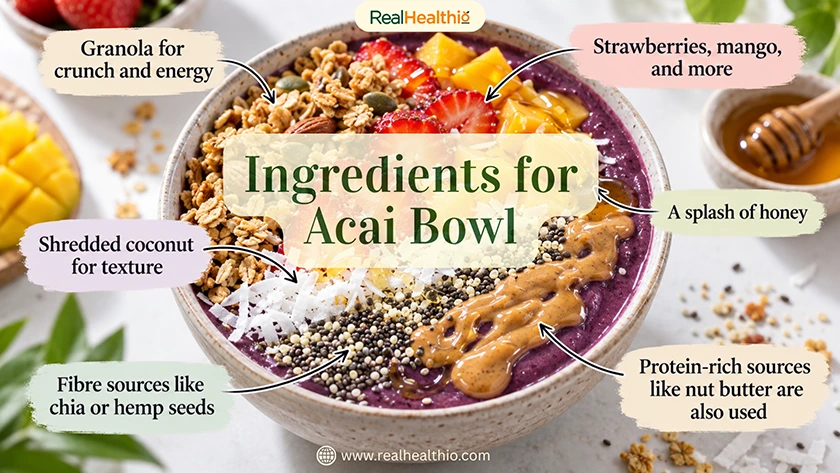
The Acai bowl has several layers to it that include a variety of ingredients. At the base, a frozen Acai puree is used along with a small quantity of liquid to add creaminess to the blend, like plant milk or fruit juice. Also, natural sweeteners like bananas are added to the bowl.
Up to here, all Acai bowls are almost the same. Now the toppings are added, which add different tastes and nutrition to it.
Some common toppings are:
- Granola for crunch and energy
- Strawberries, mango, and more
- Shredded coconut for texture
- Fibre sources like chia or hemp seeds
- Protein-rich sources like nut butter are also used
- A splash of honey
Because of a large number of options in toppings, Acai bowls made at home and cafes differ enormously. This is also why two bowls that look similar might have huge differences in their calorie count.
Acai Bowl Calories and Nutritional Benefits
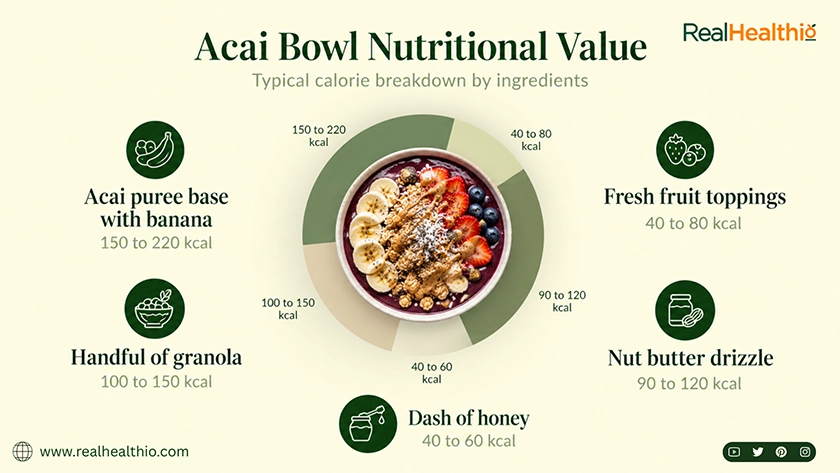
A universal calorie count for Acai Bowls is not possible, as the calories depend largely on the blend’s portion size and toppings. Even so, a calorie range helps in setting up expectations before you consume or prepare this bowl. For a better idea of how different portions may fit into your daily intake, the Calorie Calculator can help estimate your calorie needs.
| Component | Calorie Range |
|---|---|
| Acai puree base with banana | 150 to 220 kcal |
| Handful of granola | 100 to 150 kcal |
| Fresh fruit toppings | 40 to 80 kcal |
| Nut butter drizzle | 90 to 120 kcal |
| Dash of honey | 40 to 60 kcal |
| Entire bowl (typically) | 300 to 550 kcal |
A simple bowl made at home with little to no sweeteners often has fewer calories than the ones made in cafes, which are loaded with multiple toppings and larger granola portions – which often exceed 600 kcal.
In terms of nutrition, these bowls are packed with good amounts of healthy fats, fibre, and vitamin A, with the base as Acai frozen puree, which is rich in anthocyanins, the antioxidant pigment responsible for the berries’ dark purple colour. It’s one of the best healthy food options when eating out.
Are Acai Bowls Actually Healthy Or Is It Just Another Trend?
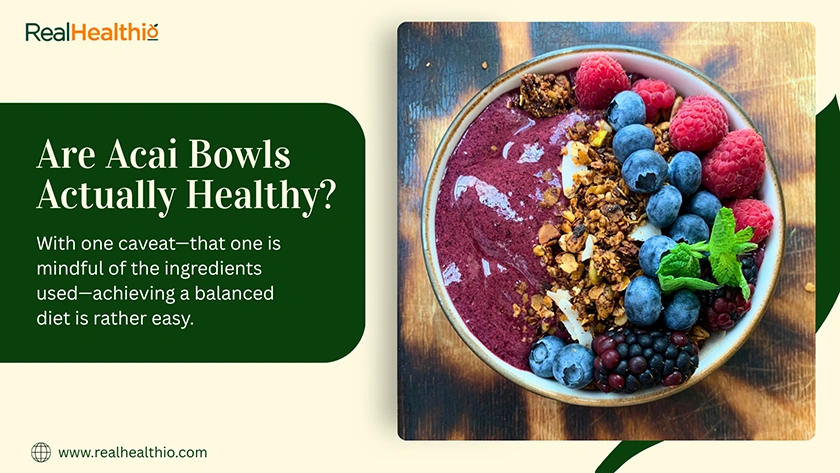
The answer honestly depends on how the bowl is made and what ingredients are used. The base made from frozen acai puree, in itself, is healthy as it consists of a good quantity of fibre and favourable fats. And while the toppings are mostly also healthy, excess use can be harmful
So, fruits should be used to maintain the bowl’s nutritional value. Keeping a sufficient portion of granola and nut butter also helps. So, if one is mindful about the ingredients used, achieving a balanced diet is rather easy. This approach also aligns with the principles of How to Eat Clean
How to Make an Acai Bowl at Home?
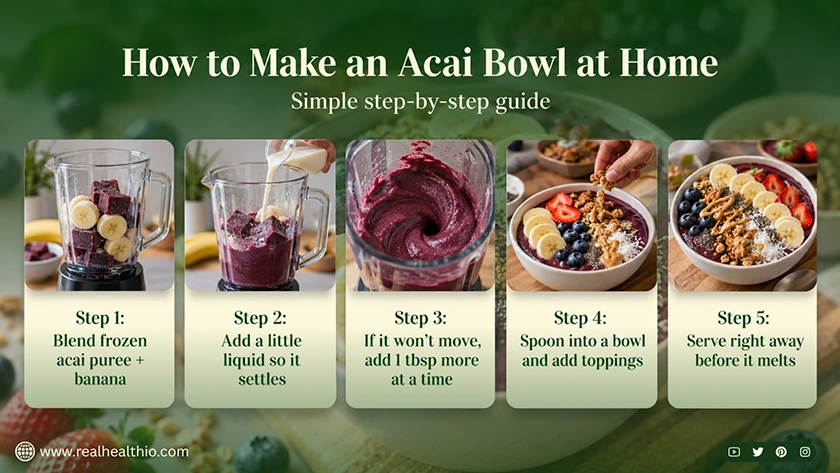
Making an Acai bowl at home is quite easy even though cafe presentations might suggest otherwise, and this way you also have complete control of the ingredients and their quantities.
The recipe relies on using liquid like plant milk, coconut water, or fruit juice in minimal amounts through a powerful blender to achieve a thick consistency rather than a pourable smoothie consistency. The ingredient list is quite simple, with frozen Acai puree packets, which are easily found in supermarkets, along with a ripe banana, a small amount of liquid, and your preferred toppings.
After collecting all the things required, run the frozen puree and banana through a blender in short time periods so that the mixture doesn’t stick to the side of the blender. After that, add a tablespoon of liquid at a time until the blades catch, but remember to not overpour the liquid to avoid a thin smoothie consistency.
The Recipe For Original Acai Bowl
Ingredients used (approx. for one person)
- 200g of frozen acai puree for the base of the bowl
- 1 frozen banana for creaminess
- 3 to 4 tablespoons of liquid, like plant milk or coconut water
- Toppings of choice, like granola or fruits
Method
- In a blender, add the frozen puree with a banana to help with sweetness.
- Add minimal liquid from time to time so that the mixture actually settles at the bottom of the blender and doesn’t stick to the sides.
- Only add more liquid if the mixture will not move; do so even one tablespoon at a time.
- Dish out the blend and add your desired toppings.
- To avoid the base melting because of the room temperature, serve it as soon as it’s made
Different Ways of Making Tropical Style Acai Bowl
To get a fruitier flavour, exchange the frozen puree for mango or pineapple. This gives the blend a slightly thinner texture and sunnier flavour than usual.
Blending banana and fruits like mango with a little liquid like fruit juice gives a thick yet comparatively runnier consistency. Lastly, top the blend with nuts, fruits, or even toasted coconut.
What To Check If You Want an Organic Bowl?
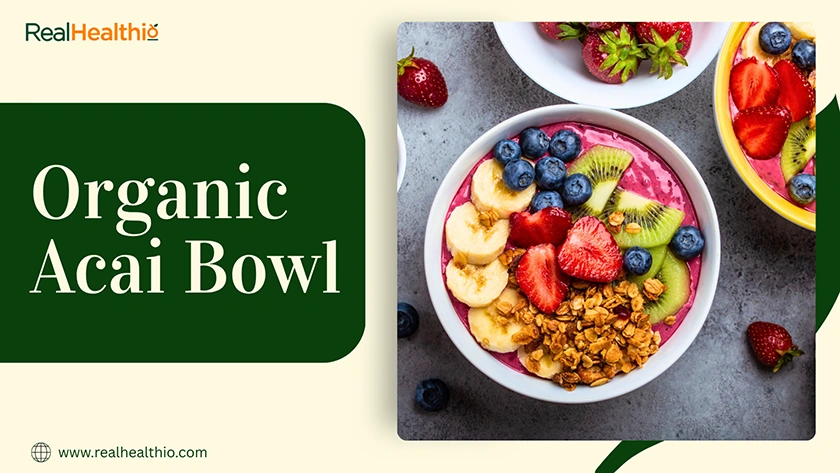
If you’re building healthier eating habits, choose an authentic acai bowl and make sure that its puree carries a certification for its organic claims. Since this ingredient makes up most of the bowl’s nutrition and portion, it is important to check the puree for your bowl to be more organic.
Most brands thus provide certified organic packets. Also check for the organic identity of other ingredients, like looking for granola without added sugar and fruit toppings that are free from syrup coatings, because these small adjustments make a bigger impact on the overall healthfulness of the bowl.
How To Achieve The Perfect Consistency And Texture?
A few habits mark the difference between a mediocre bowl with high calories and a genuinely satisfying bowl that is loaded with healthy fats and antioxidants, ideal for better nutrition and everyday health.
- Use frozen bananas for a thicker consistency
- Blend the mixture in small durations to avoid the mixture sticking to the blender’s sides
- Don’t use a lot of liquid, as this will make the blend thin rather than a spoonable consistency
- Chill the serving bowl before pouring the blend. This way, while you arrange the toppings, the base won’t melt.
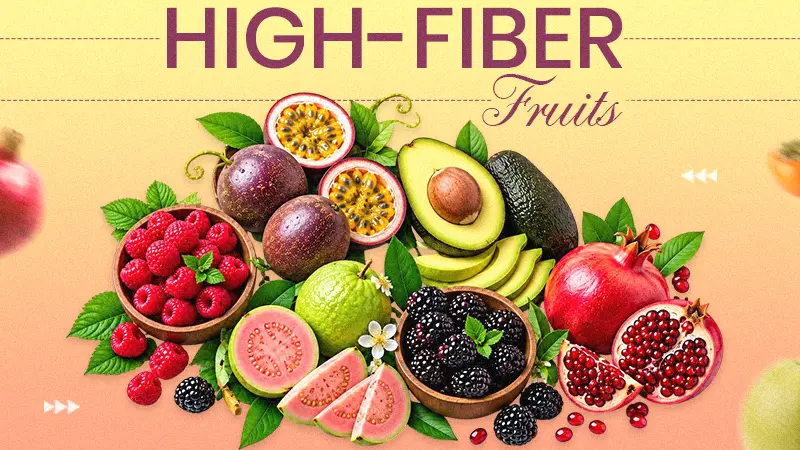
Suggested Reading: What Fruit Has the Most Fiber? 15 Fruits Compared
Mistakes to Avoid While Making an Acai Bowl
- Adding too much liquid, which makes the base closer to a smoothie consistency than a bowl consistency.
- Excess toppings like granola or nut butter can undermine the nutrition of the bowl
- Not using frozen puree, which can lead to a watery base and poor flavour palette.
Conclusion
An Acai bowl which is prepared mindfully brings good nutritional value while offering a balanced diet. The berry itself carries good amounts of antioxidants, which can be adapted to various formats so that one can enjoy it both as an indulgent bowl and a light breakfast – depending on the mood. Making one yourself is much healthier than buying it, as this way you have control over the ingredients and their portions.
FAQs
What is an Acai bowl made of?
What is Acai?
It is a small dark purple berry with an earthier flavour that grows in Brazil. It is extremely perishable, and that is why it’s sold frozen or freeze-dried outside Brazil.
Can a person eat an acai bowl during a diet?
Usually, it has a low calorie count – between 300 and 500 kcal and hence is ideal to consume if someone is on a diet. However, if extra toppings are added or portion sizes are big, then it may not be recommended.
What are the effects of acai bowls in weight loss?
There are no particular statistics that prove this; however, many studies show that it is recommended for people who are dieting and looking to follow a cleaner lifestyle.
Are there any other alternatives to the blender for making this bowl?
Yes, there is equipment like food processors that you can use in place of blenders for making this bowl.
Does Acai’s taste resemble that of blueberry?
No, it has a completely different taste, with the flavours being more on the chocolatey side. This is because, unlike blueberries, it grows in dense clusters on palm trees.
Can I buy pre-made bowls?
Yes, you can, but you should always check the ingredients before buying them, as pre-made versions sold in supermarkets have added sugar.
Related Posts