No! Chia seeds and sabja seeds are entirely different, extracted from distinct plants. They are often used interchangeably due to similar appearance.
Sabja Seeds Vs Chia Seeds: Which Is Better for Your Diet?
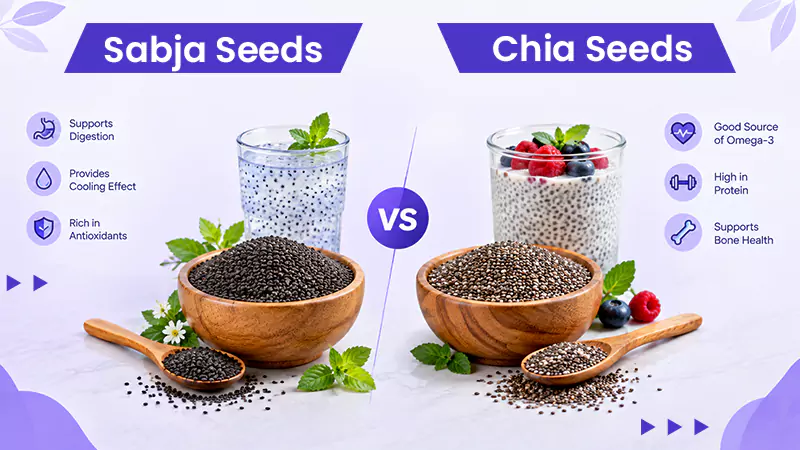
Sabja seeds and chia seeds are superfoods due to high amounts of dietary fiber and essential minerals. When soaked, they appear to be identical, as they have a similar gelatinous texture. However, in reality, they come from entirely different plants and serve distinct dietary needs.
This article cuts through the confusion between sabja seeds vs chia seeds based on their nutrition, preparation time, and culinary use so that you can make the right choice as per your needs.
Quick Answer
Sabja seeds come from the sweet basil plant, and they are great for quick preparation due to their high fiber content. These seeds are traditionally used in falooda, lemonade, coconut water, and other beverages. Chia seeds belong to the Salvia plant. They are famous for being soaked overnight for breakfast bowls, puddings, smoothies, and baked goods.
Table of Contents:
- Are Sabja Seeds and Chia Seeds the Same?
- Chia Vs Sabja Nutrition: What Actually Differs?
- Which Is Better: Chia or Sabja?
- The Seed Is Not the Whole Meal
- Chia Seeds Vs Sabja Seeds for Weight Loss
- Sabja Vs Chia: Which Is Easier to Prepare?
- Can Sabja Replace Chia in Recipes?
- Can You Eat Chia and Sabja Seeds Together?
- Side Effects and Precautions
- Which Seed Should You Choose?
- FAQs
Are Sabja Seeds and Chia Seeds the Same?
It’s commonly asked whether chia seeds and sabja seeds are same. Though sabja seeds and chia seeds have quite similar texture and appearance, they come from entirely different plant sources. They also have distinct taste and soaking time.
Let’s see the difference between chia seeds and basil seeds:
Plant source
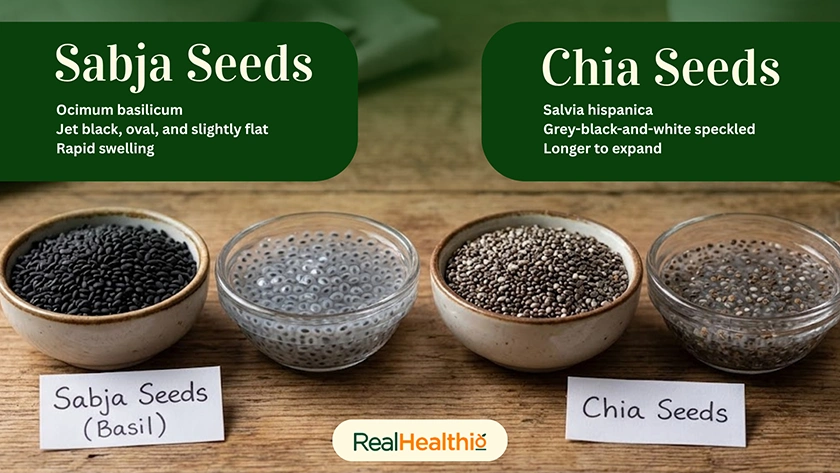
Sabja seeds come from the sweet basil plant (Ocimum basilicum). The plant is native to the tropical regions of India, Africa, and Southeast Asia. Chia seeds come from the Salvia plant (Salvia hispanica). This flowering plant is native to Central America.
Common Names
Sabja seeds are commonly known as basil seeds, sweet basil seeds, Tukmaria seeds, and falooda seeds. On the other hand, chia seeds are simply called chia seeds or Mexican chia seeds.
Appearance
The dry sabja seeds are jet black, oval, and slightly flat. Chia seeds are slightly larger and have a grey-black-and-white speckled appearance.
Soaked texture
When sabja seeds are soaked, they swell up rapidly. The gel has a thick white appearance, and the seeds stay intact. Whereas chia seeds take longer to expand. The gel has a relatively uniform texture, and the seeds also soften by soaking.
Quick comparison table
| Feature | Sabja Seeds | Chia Seeds |
|---|---|---|
| Origin | Sweet basil plant (South Asia) | Salvia plant (Central America) |
| Colour | Jet black | Mix of grey, black, and white |
| Soaking Time | 5-10 minutes | 20-30 minutes |
| Gel Texture | Soft exterior gel with light crunch inside | Uniform gel with soft seeds |
| Taste | Almost neutral | Slightly nutty |
| Consumption | Must be soaked before consumption | Can be eaten dry or soaked |
Chia Vs Sabja Nutrition: What Actually Differs?
Both chia seeds and basil seeds are packed with high nutrient content. They are rich in fiber, protein, and key minerals like calcium, phosphorus, and iron. However, their nutritional profiles differ significantly based on what you are looking forward to adding to your diet.
Let’s understand the difference between chia and sabja according to nutritional value:
Chia Seeds Nutrition
Here is the chia seeds nutritional value based on the USDA Central database:
| Nutrient | Chia seeds (100g) | Chia seeds (typical serving of 1 oz or 28.35g) |
|---|---|---|
| Fiber | 34.4 g | 9.75 g |
| Protein | 16.5 g | 4.68 g |
| Fat | 30.7 g | 8.7 g |
| ALA omega-3 | 17.8 g | 5.05 g |
| Calcium | 631 mg | 179 mg |
| Magnesium | 335 mg | 95 mg |
| Phosphorus | 860 mg | 244 mg |
| Iron | 7.72 mg | 2.19 mg |
Sabja Seeds Nutrition
Here is the sabja seeds nutrition based on the PubMed Central article:
| Nutrient | Sabja seeds (100g) |
|---|---|
| Fiber | 22.6 g |
| Protein | 14.8 g |
| Fat | 13.8 g |
| ALA omega-3 | 7 g (49.3–52.4% of total lipids) |
| Magnesium | 31.55 mg |
| Iron | 2.27 mg |
The typical serving of the sabja seeds is about 1-2 teaspoons or 1 tablespoon of the dry seeds a day.
You can use the macro nutrient calculator to see how adding chia or sabja seeds matches your daily fat and protein targets.
Which Is Better: Chia or Sabja?
So chia vs sabja: which is better? Both seeds are beneficial according to their use, and neither one is universally “better”. The choice depends on culinary use, nutrition target, and preparation.
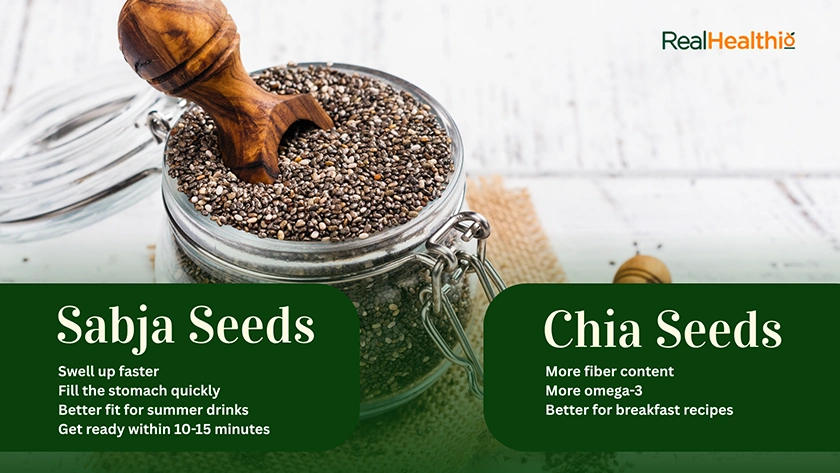
- Fiber: Chia seeds offer more fiber content (34.4 g/100 g) as compared to basil seeds (22.6 g/100 g). Mexican chia seeds contain both soluble and insoluble fiber that slows digestion and keeps you full for a longer time. Basil seeds contain mostly soluble fiber that aids bowel movements.
- Omega-3: Chia seeds contain more omega-3 (17.8 g/100 g) than sabja seeds (about 7 g/100 g). In this way, these seeds support heart health and improve brain function.
- Weight-conscious eating: Both seeds are beneficial for weight-conscious eaters. Chia seeds absorb water slowly and keep you full for longer. On the other hand, sabja seeds swell up faster and fill the stomach quickly.
- Summer drinks: Sabja is the better fit for traditional summer drinks. These seeds swell up faster and blend well with lemonade, falooda, and rose milk.
- Breakfast: Chia seeds are better for breakfast recipes like pudding, smoothies, and breakfast bowls. They have a thicker gel that provides longer fullness.
- Quick preparation: For faster preparation, sabja seeds are preferred as they get ready within 10-15 minutes, working well for last-minute drinks and refreshers. Chia seeds take hours of preparation, and they work well for overnight oats or meal preps.
The Seed Is Not the Whole Meal
It’s important to understand that whether it is chia seed or sabja seed, its overall health benefits depend on how it is prepared and what it is paired with. In this way, the overall nutritional value depends on the surrounding ingredients of the seeds.
Plain Sabja Drink Vs Sugar-Heavy Falooda
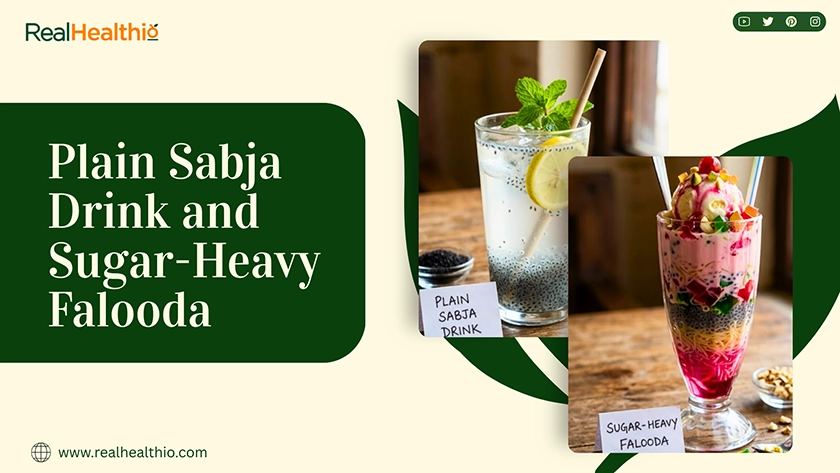
The sabja seeds added to water or unsweetened lemon juice offer high fiber with minimal calories. On the other hand, if the seeds are added to a traditional falooda recipe, it works as the high sugar and high calorie dessert.
Chia + Plain Yogurt/Fruit Vs Sweetened Chia Dessert
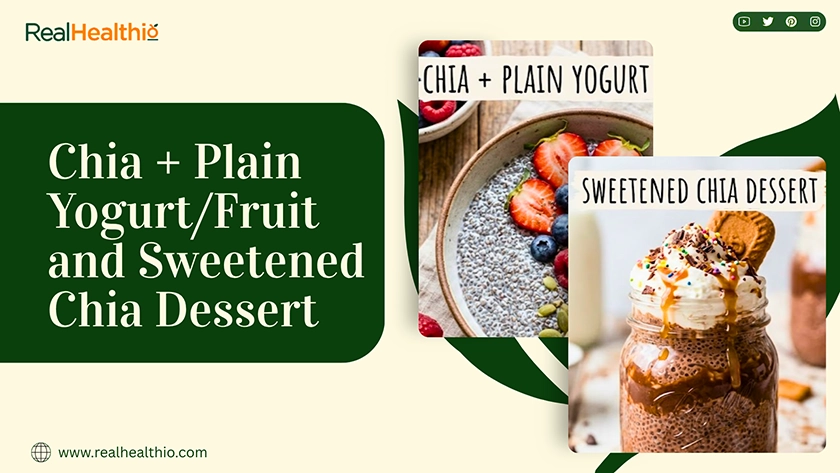
If you use chia seeds in plain yoghurt topped with some fruit, it will be a protein-rich breakfast. On the other hand, if you mix the seeds into sweetened pudding or smoothie, it will be less nutritious and sugar-heavy.
Therefore, to eat clean, it is crucial to look at the whole meal rather than just the nutritional value of the seeds. Be mindful of what you are adding to the recipe to consume as per your lifestyle.
Chia Seeds Vs Sabja Seeds for Weight Loss
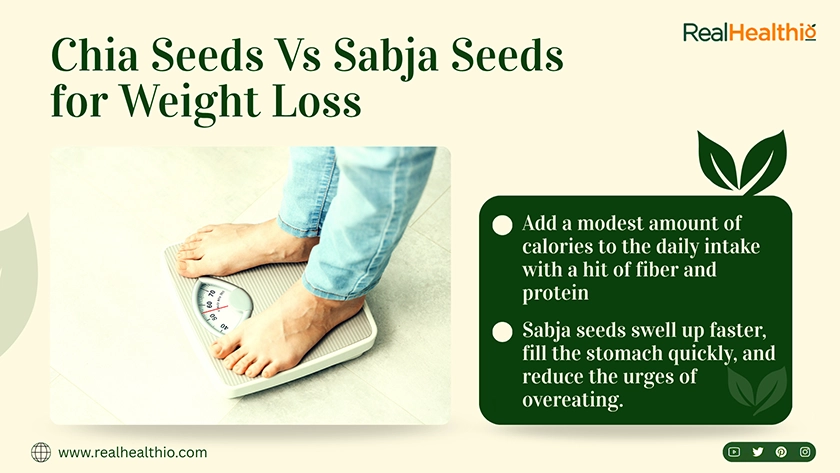
If you want to lose weight, either of the seeds is a great addition to your diet. They may support your weight loss journey indirectly. By absorbing water, they form a gel in the stomach. This keeps you fuller for a longer period. To understand how many calories you should consume in a day based on your goal, you can use the calories tracker.
Here is the difference between chia and sabja seeds when it comes to weight loss:
- Calories and serving size: Chia seeds provide 486 kcal/100g whereas sabja seeds offer 442 kcal/100 g. In a typical serving of 1 tablespoon, these seeds add a modest amount of calories to the daily intake with a hit of fiber and protein.
- Satiety effect: Both seeds promote a fuller feeling (satiety) in the stomach. Chia seeds absorb water more slowly and delay gastric emptying. Sabja seeds swell up faster, fill the stomach quickly, and reduce the urges of overeating.
Sabja Vs Chia: Which Is Easier to Prepare?
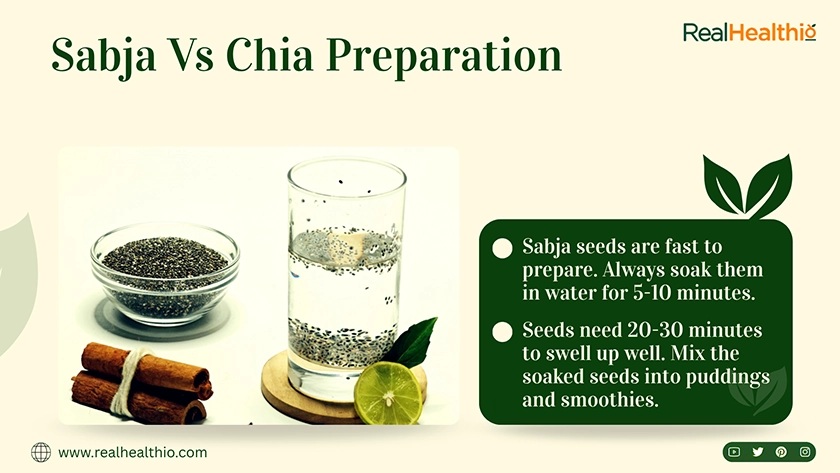
Both seeds are highly versatile for culinary options. You can incorporate these seeds into meals and beverages, improving their nutritional value. They swell up and have a gel-like texture that goes well with many modern recipes. These seeds are also good for hydration as the outer layer holds onto water. When consuming these seeds, you can track your water intake with the water intake calculator.
Sabja Seeds
Sabja seeds are fast to prepare. Always soak them in water for 5-10 minutes to make them fully gelatinized. The seeds are easy to swallow and digest. Sabja seeds uses are versatile, as they can be added to coconut water, lemonade, buttermilk, and milkshakes. The seeds are great for hydration without adding too many calories.
Chia Seeds
Chia seeds also offer various preparation options. These seeds need 20-30 minutes to swell up well. People often prefer to soak them overnight for best results and use them in breakfast the next morning. Mix the soaked seeds into puddings and smoothies. You may also sprinkle them over salads, yoghurt bowls, or oats for added nutrition.
These seeds can also be used as an egg substitute in baking. Mix one tablespoon of seeds with 3 tablespoons of water as an alternative to one egg. This binds the ingredients well and works like a vegan substitute.
Can Sabja Replace Chia in Recipes?
Sabja seeds can replace chia in many beverages and light liquid recipes. You can use it in drinks, falooda, and lemonade seamlessly. The seeds can also work well in yoghurt and smoothies, though they add a slightly crunchier texture.
In puddings and baking, chia seeds work better. They add a thicker texture in puddings and act as a better binder in baked goods.
Can You Eat Chia and Sabja Seeds Together?
You can combine chia and sabja seeds in desserts, smoothies, and drinks. In this way, you may enjoy the fast hydration of sabja and the omega-3 boost of chia seeds. You don’t need to do any complex “seed stacking” for this. Simply keep the portion sizes reasonable according to your diet plan.
Side Effects and Precautions
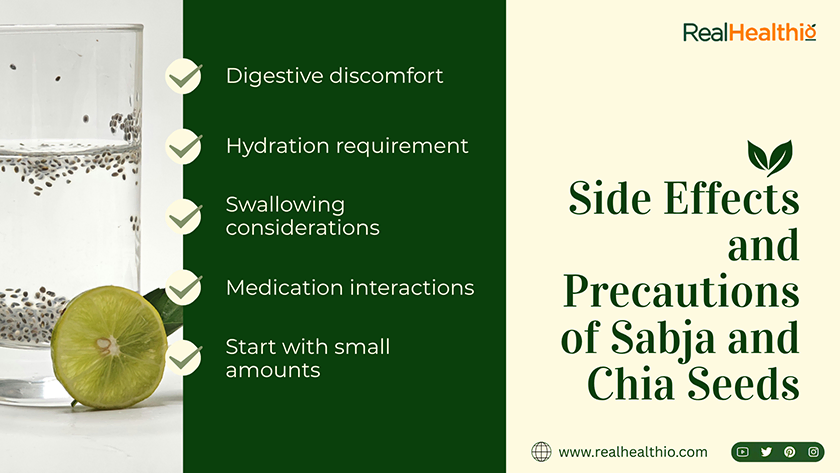
Both seeds are considered healthy and safe for most people. However, they can cause some side effects, including digestive issues and medication interactions. It’s important to practice caution and always eat them soaked, maintaining proper hydration.
Let’s see chia and sabja seeds side effects and precautions:
- Digestive discomfort: Excessive consumption of the seeds can lead to gas, bloating, and stomach cramps because of the high fiber content.
- Hydration requirement: It’s crucial to drink plenty of water throughout the day when consuming these seeds daily. The right water intake helps prevent constipation and aids digestion.
- Swallowing considerations: Always soak the seeds well before consumption to prevent choking risks. They absorb water and may swell in the throat.
- Medication interactions: Individuals who are already on medications for diabetes, blood thinners, or antihypertensive drugs should talk to a doctor before using these seeds daily.
- Start with small amounts: Begin with 1 teaspoon or 1 tablespoon of the seeds and gradually increase the dose over time. Ensure proper hydration to help your body adjust to the increased fiber.
Which Seed Should You Choose?
Both sabja seeds and chia seeds are great superfoods. Either of them works for weight loss or general healthy eating out. You can make your choice based on your individual needs and preferred preparation method.
Choose chia seeds if:
- You want an omega-3, fiber, and protein boost.
- You prefer overnight soaked seeds to be added to puddings, yoghurt, and baked goods.
- You want seeds that can also be eaten raw or sprinkled over salads and oats.
Choose sabja seeds if:
- You want an instant gel high-fiber option.
- You want to add nutrition to cold beverages like falooda, lemonade, and coconut water.
- You like a slightly nutty flavour with a jelly-like coating and an inner crunch.
FAQs
Is chia seed and sabja same?
Which is better, chia or sabja?
Both are great superfoods to be added to the diet. Chia is a great fit for omega-3 and calcium, and sabja is preferred due to its faster preparation and digestive support.
What are chia seeds vs sabja seeds benefits for weight loss?
The seeds help with weight loss indirectly by expanding in water and keeping you full for longer. In this way, they reduce cravings and prevent overeating.
Can you eat chia and sabja together?
Yes! They can be eaten together for nutritional support. Combine them in desserts, smoothies, and drinks. Consider your portion size and calorie intake for the best results.
Can sabja replace chia?
Yes! You can replace sabja with chia in some drinks and smoothies. Though, chia is considered better to be used in baking due to improved binding and in puddings thanks to its thicker texture.
Which is better for digestion, chia or sabja?
Both seeds are great to improve digestive health. Sabja seeds provide faster relief from bloating and acidity. On the other hand, chia seeds offer long-term digestive wellness and support regular bowel movements.
Chia seeds are from which plant?
Chia seeds come from Salvia hispanica. This is a flowering plant that belongs to the mint family.

Related Posts