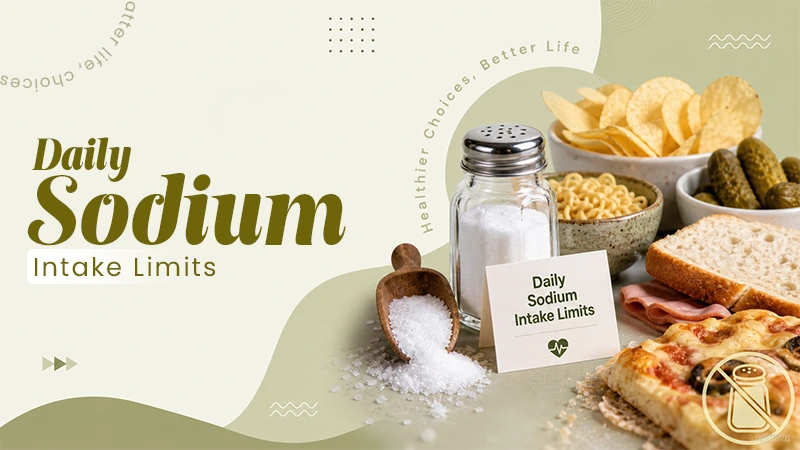
No. Sodium is an essential mineral required for the body for normal functions such as fluid balance and nerve activity. The concern is excessive intake. WHO recommends that adults should consume less than 5 grams of salt per day.
Food Must Have Limited Amount of Salts: Reasons, Risks & Daily Sodium Limits
Food must have a limited amount of salt because too much sodium can raise blood pressure and increase the risk of heart disease and stroke.
ICMR-NIN (Indian Council of Medical Research – National Institute of Nutrition) recommends limiting total daily salt intake to a maximum of 5 grams (equivalent to about one level teaspoon or 2,000 mg of sodium).
Salt is an essential part of a regular diet, but the amount you consume matters extremely. Your body needs sodium for regular functions like fluid balance, nerve function, and neurological processes.
But little do people know that enough sodium can be consumed without adding too much of it to our diet.
Here is why and how to limit salt, how much to consume, foods to avoid, and simple ways to reduce the intake.
Quick Answer:
Our food must have limited amount of salts, as excess of it may result in serious health issues such as water retention, escalating blood pressure, and strain on the heart. Consuming excess salt in our everyday life may directly contribute to increased sodium intake.
Table of Contents:
- Why Should Food Have a Limited Amount of Salt?
- How Much Salt Should You Eat Per Day?
- What Happens If You Eat Too Much Salt?
- Salt vs. Sodium: Know the Difference
- High-Sodium and Hidden-Sodium Foods
- What is the Science Behind Naturally Occurring Sodium?
- How to Reduce Salt Intake
- A Simple Checklist for Eating Low-Salt
- Bottom Line
- FAQs
Why Should Food Have a Limited Amount of Salt?
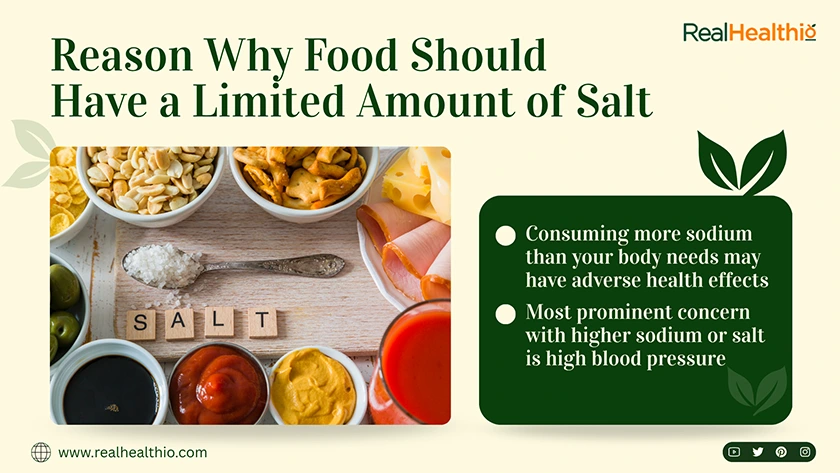
Salt is mainly sodium chloride (NaCl). Sodium is a naturally occurring chemical element and mineral that is essential for maintaining fluid balance in the human body. It also supports nerve and muscle function.
However, consuming more sodium than your body needs may have adverse health effects.
The most prominent concern with higher sodium or salt is high blood pressure. Furthermore, higher blood pressure can increase the risk of cardiovascular disease, heart disease, and stroke.
The NIN guidelines note a direct relation between high salt intake and increased risk of stomach cancer.
The Dietary Guidelines for Indians by ICMR-NIN clearly state that “average salt consumption in India is roughly double the recommended limit (around 9 to 10 grams per day).” It also suggests limiting processed and high-salt items like pickles, namkeen, papad, sauces, chutneys, bakery goods, and packaged and canned foods.
Limiting salt doesn’t mean avoiding it completely. Sodium is required by the body, but most people can meet their needs without consuming large quantities of sodium.
A useful approach is to focus on overall diet instead of relying on added salt while cooking. Processed and packaged foods can also contribute significantly and make it easy to exceed the prescribed limits without realizing it.
How Much Salt Should You Eat Per Day?
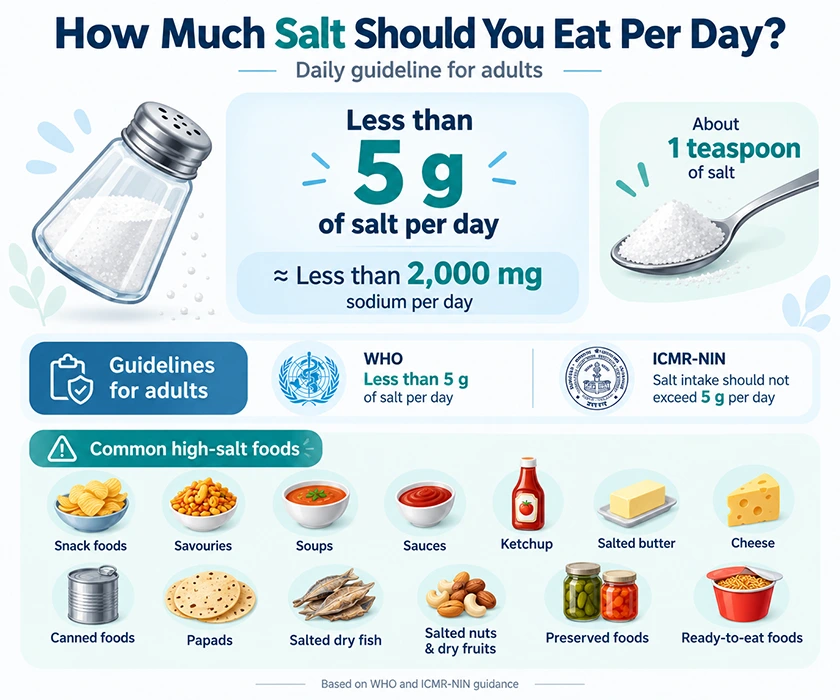
The average limit recommended by both WHO and ICMR-NIN is about 5 grams of salt per day. However, the way of recommendation is different for different advisories.
| Guidelines | Daily recommendation for adults |
|---|---|
| WHO | Less than 5 g of salt per day |
| WHO equivalent | Less than 2,000 mg sodium per day |
| ICMR-NIN | Salt intake should not exceed 5 g per day |
| Approximate household measure | About 1 teaspoon of salt |
WHO recommends less than 2,000 mg of sodium per day, which is equivalent to or less than 5 grams of salt.
ICMR-NIN’s 2024 Dietary Guidelines state that salt intake should not be more than 5 grams per day, equivalent to about 2 grams of sodium.
But the question here is: does the 5-gram limit include salt from all foods?
The answer is yes! The limit refers to total salt intake for the day, not only the salt you add to the food while cooking.
Salt can come from these sources:
- Salt added during cooking
- Table salt added after cooking
- Pickles and papads
- Namkeen and salted snacks
- Sauces and ketchup
- Processed and ready-to-eat foods
- Preserved foods
- Salt-containing ingredients and additives
This is why, though, some people use very little table salt but keep on consuming high amounts of sodium throughout the day due to their dietary habits.
ICMR-NIN guidelines specifically identify the snack foods, savouries, soups, sauces, ketchup, salted butter, cheese, canned foods, papads, salted dry fish, salted nuts and dry fruits, preserved foods, and ready-to-eat foods as the major contributors to higher salt or sodium consumption.
What Happens If You Eat Too Much Salt?
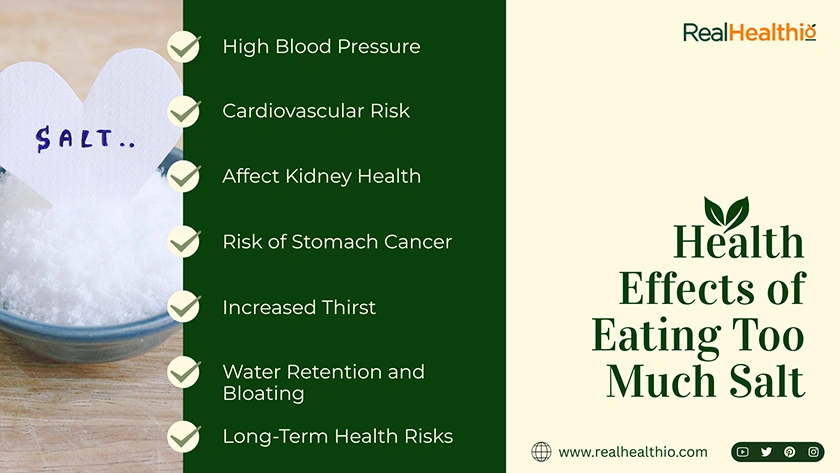
Consuming too much salt regularly increases the sodium intake beyond the recommended levels. Here are the health effects that can be caused by high sodium in the blood:
High Blood Pressure
A high-sodium diet can contribute to higher blood pressure. Even the WHO identifies high sodium intake as the primary cause of higher blood pressure.
Not everyone responds to salt in the same way. The sensitivity towards sodium varies across people. It can increase blood pressure in salt-sensitive individuals, while the same response may not occur in people who are salt-insensitive.
Increased Cardiovascular Risk
Because high sodium intake can contribute to raised blood pressure, having too much of it regularly can increase the risk of cardiovascular disease.
Therefore, it is recommended to reduce sodium intake specifically to reduce blood pressure and the risk of cardiovascular disease, stroke, and coronary heart disease.
Affect Kidney Health
Kidneys play an important role in maintaining sodium levels and fluid balance in the body. A consistently high intake of salt can put an extra load on the kidneys and cause kidney issues.
People who already have kidney disease need to strictly follow the dietary requirements given by a doctor or dietitian, as their kidneys may not remove the sodium effectively from the body.
Increased Risk of Stomach Cancer
WHO and ICMR-NIN have established a direct correlation between high salt or sodium intake and stomach cancer
However, it is not necessary that high consumption always leads to cancer; the concern relates to excessive and habitual intake and overall dietary patterns.
Water Retention and Bloating
Eating too much salt makes the body retain more water than usual. Sodium is necessary for fluid regulation in the body, but when there is an excess of it, the body starts holding on to more water than required.
This can result in bloating, puffiness, and swelling, mainly around the face, hands, feet, and ankles.
Increased Thirst
A salty meal can noticeably increase your thirst. When Sodium levels rise, the body requires additional water to dilute the excess sodium and maintain proper balance.
This is the reason you may feel like drinking more water after salt-rich foods like chips, pickles, instant noodles, processed snacks, and more.
Higher Long-Term Health Risks
Frequently consuming more sodium than recommended can cause several health risks, such as raised blood pressure and cardiovascular diseases.
Over time, uncontrolled blood pressure can contribute to serious complications, including stroke and heart disease.
Salt vs. Sodium: Know the Difference
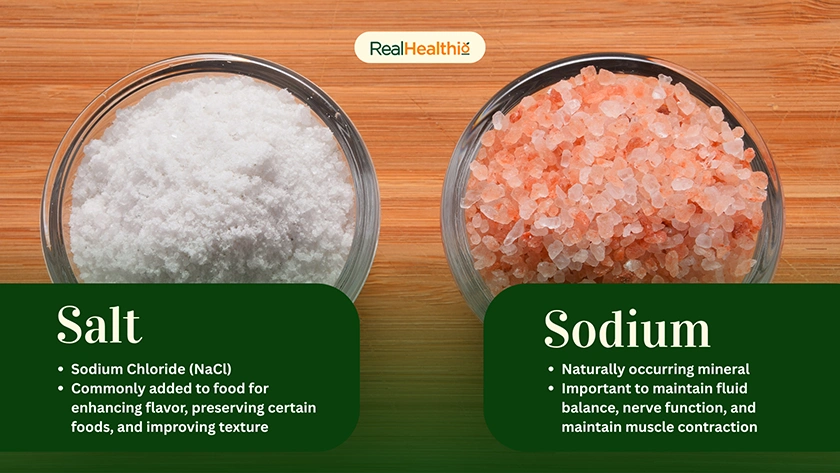
Salt and sodium are related, but they are not essentially the same thing.
What is Salt?
Salt is Sodium Chloride (NaCl). The common table salt contains around 40% sodium and 60% chloride by weight. Salt is commonly added to food for enhancing flavor, preserving certain foods, and improving texture.
What is Sodium?
Sodium is a naturally occurring mineral and essential electrolyte that the human body requires in small amounts. It is important to maintain fluid balance, support nerve function, and maintain muscle contraction.
However, too much sodium in your diet can lead to health problems like raised BP.
Salt Contains Sodium
Sodium is the main component of salt, and thus eating salty foods can increase sodium intake. However, sodium can also be found in foods and ingredients that don’t taste salty. Therefore, taste cannot be a determining factor for the presence of sodium.
Checking the sodium value can help identify foods that can contribute significantly to your daily intake.
It is important to pay extra attention to products that you eat frequently, such as packaged, processed foods, sauces, instant foods, and other ready-to-eat products.
Eating several foods of this category throughout the day can collectively push the sodium intake above the recommended limit. Thus, make sure to choose nutritious foods at restaurants or at home to minimize salt consumption.
High-Sodium and Hidden-Sodium Foods
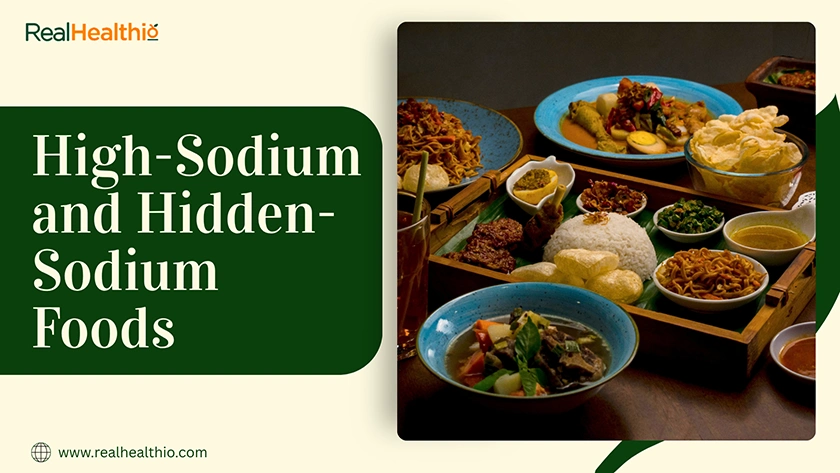
Some foods may taste obviously salty, while others may contain a large amount of sodium without tasting extremely salty; they contain “hidden” or masked sodium, but the effects remain the same.
The sodium content of foods can depend on the brand, recipe, serving size, and preparation method.
Therefore, in packaged foods, checking the nutrition label is one of the best ways to identify sodium content.
The FDA uses 2,300 mg of sodium per day as the daily value for adults, and 20% DV or more per serving is considered high.
Let’s understand how some commonly available foods may have more salt than we can imagine and how much quantity may be enough:
| Category | Food Type | Why It May Have Hidden Sodium | Recommended quantity |
|---|---|---|---|
| Indian snacks | Namkeen, bhujia, sev, mixture | Salt is added during preparation, and some varieties may also contain sodium-containing seasonings. | 1 small handful (25–30 g) |
| Packaged snacks | Chips, wafers, salted crackers | Salt and sodium-based flavourings can be added during processing. | 1 small packet (25–40 g) |
| Papad | Plain or masala papad | Salt is commonly added to the dough, and masala varieties may contain additional sodium. | 1–2 papads |
| Pickles | Mango, lemon, mixed-vegetable pickle | Salt is used as part of preservation, making pickles a concentrated source of dietary salt. | 1–2 tbsp (15–30 g) |
| Sauces & condiments | Ketchup, chilli sauce, soy sauce, sandwich spreads | Sodium can come from added salt and ingredients used for flavouring and preservation. | 1–2 tbsp (15–30 g) |
| Instant foods | Instant noodles, soup mixes, pasta mixes | Seasoning sachets, flavour enhancers and other processed ingredients can contribute substantial sodium. | 1 serving/packet |
| Ready-to-eat foods | Packaged curries, meals, frozen snacks | Salt and sodium-containing ingredients may be used for flavour, processing and preservation. | 1 serving |
| Canned & preserved foods | Canned vegetables, soups and preserved foods | Sodium may be added during processing or preservation. | ½–1 cup (120–240 g) |
| Salted nuts | Salted peanuts, cashews, almonds and mixed nuts | Salt is added to the nuts during roasting or seasoning. | 1 small handful (25–30 g) |
| Cheese & processed dairy | Processed cheese, cheese slices, cheese spreads | Sodium can be present because of processing and added salt. | 1–2 slices or 20–40 g |
| Processed meats | Sausages, bacon, ham and other cured meats | Salt and other sodium-containing ingredients are commonly used during curing and processing. | 1 serving (about 50–75 g) |
| Bakery foods | Bread, buns, savoury biscuits and crackers | Sodium can come from added salt as well as ingredients such as baking soda or baking powder. | 2–4 slices/pieces |
| Seasoning products | Stock cubes, soup powders, seasoning mixes | These products can contain concentrated amounts of salt and sodium-based additives. | 1 cube or 1 sachet/serv ing |
Important Tip: Check the nutrition label rather than judging any food by its taste only. And make sure you follow the recommended limit of 2,000 mg per day by calculating the exact amount of sodium present on the label, rather than assuming a fixed sodium value.
What is the Science Behind Naturally Occurring Sodium?
Sodium is naturally present in many foods, such as cereals, pulses, vegetables, milk, eggs, meat, fish, and other animal foods.
However, the amount of sodium naturally present in most of the unprocessed or minimally processed foods is relatively modest when compared to foods in which sodium is added externally and/or through processing.
Therefore, the natural foods with sodium usually do not contribute the same large amount as foods to which salt is added during cooking, preservation, or manufacturing.
For example, a meal made of rice, dal, vegetables, or fresh curd will contain naturally occurring sodium. When salt is added while cooking, the sodium amount increases.
Whereas processed and packaged foods contain even higher amounts of sodium already, and cooking may increase it even more. Thus, the main focus should be on using less added salt and eating limited highly processed foods.
Choosing more fresh and minimally processed foods is part of eating clean and can help reduce overall sodium intake while providing other important nutrients
Simply put, some sodium naturally occurs in healthy foods, but much of the extra sodium in the diet comes from added salt or processed foods.
How to Reduce Salt Intake
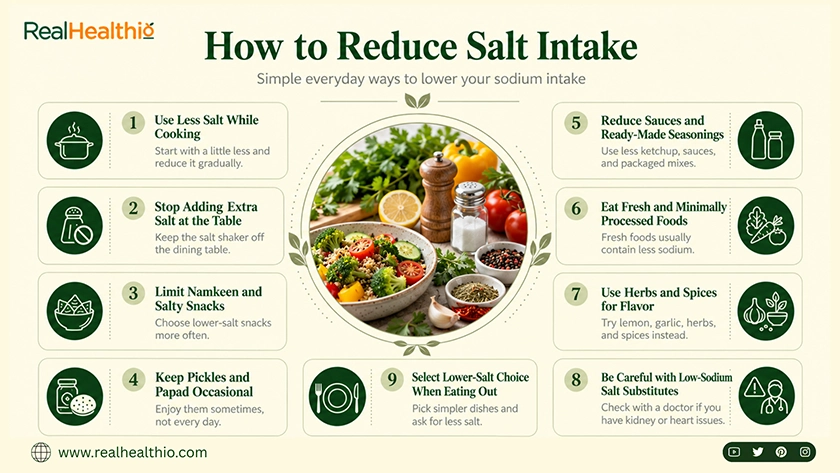
Start small! You do not need to make your food bland; just adapt the changes that you can manage long-term and reduce the overall salt you consume.
Use Less Salt While Cooking
Start by reducing the amount of salt added during cooking. Your taste preferences and taste buds will adapt to the change in taste over time. Remember, salt preferences are influenced by healthy eating habits.
ICMR-NIN notes that taste for salt is acquired, and salt consumption can be restricted from an early age.
Stop Adding Extra Salt at the Table
Taste your food before reaching for the salt shaker. If the meal already contains enough seasoning or other spices, additional salt may not be required.
Limit Namkeen and Salty Snacks
Namkeen, chips, savouries, and other salted snacks can lead to excessive salt consumption without feeling like you have eaten enough.
Choose fresh fruits, unsalted nuts, roasted foods without added salt, and minimally processed snacks instead of highly processed ones.
Keep Pickles and Papad as Occasional Additions
Adding items like pickles and papads to every meal can contribute to salt consumption. Instead of having large portions every day, keep the serving size small.
Reduce Sauces and Ready-Made Seasonings
Sauces, ketchup, instant seasoning mixes, soups, stock products, and similar items can contribute to sodium.
Using smaller quantities can reduce your overall intake without requiring the removal of these foods completely.
Eat Fresh and Minimally Processed Foods
Try to build your meals around fresh vegetables, fruits, pulses, whole grains, nuts, seeds, and other minimally processed foods.
These foods can reduce reliance on heavily processed and salty products.
ICMR-NIN recommends increasing potassium-rich foods such as vegetables and fruits alongside reducing sodium intake.
Use Herbs and Spices for Flavor
Lemon, coriander, mint, garlic, ginger, cumin, black pepper, and other herbs and spices can add flavor without relying entirely on salt.
The goal is not to remove flavor. It is to make salt a part of seasoning, instead of being the main source of taste.
Be Careful with Low-Sodium Salt Substitutes
WHO’s 2025 guidelines suggest that adults may replace regular table salt with lower-sodium substitutes containing potassium as a part of a sodium-reduction strategy.
However, this recommendation is not applicable to individuals with kidney impairment or conditions that affect potassium excretion. Such people may need to avoid them or use them under strict medical guidance.
Also, the salt that you consume should be iodized because iodine is important for health alongside sodium.
Select Lower-Salt Choice When Eating Out
To stay on track while eating out, try to make more mindful choices.
Restaurants and takeaway meals contain added salt through sauces, seasoning, and cooking methods. Therefore, ask for less added salt or request seasonings and dressings separately.
A Simple Checklist for Eating Low-Salt
Here is a quick checklist to help you keep your daily salt intake under control:
☐ Keep total salt intake below 5 g per day.
☐ Use less salt while cooking.
☐ Avoid adding extra salt automatically at the table.
☐ Limit namkeen and salted snacks.
☐ Keep pickles and papad portions small.
☐ Check sodium on packaged-food labels.
☐ Limit sauces, ketchup, and instant seasoning products.
☐ Choose fresh or minimally processed foods more often.
☐ Include vegetables and fruits regularly.
☐ Use herbs, spices, lemon, and other flavors instead of relying heavily on salt.
Bottom Line
Food must have limited amount of salts because excess sodium can gradually affect our blood pressure, heart health, and overall well-being. Staying within the recommended daily salt limit is important. Packaged foods, pickles, sauces, chutney, and other processed meals can add a significant amount of hidden sodium to your diet. Thus, choosing fresh food, checking labels, and using less salt may help reduce your daily salt intake.
FAQs
Is eating salt completely unhealthy?
Is 5 grams of salt a day too much?
The maximum recommended level for salt is five grams per day, though it’s not a target that everyone must reach. The daily recommendation for salt intake, measured in grams, given by WHO is less than 5 grams, and ICMR-NIN also states that intake should be limited to 5 grams daily.
Does Himalayan pink salt contain less sodium?
Even though there may be different brands and types of edible salt, the common chemical nature of salt will always include sodium. Therefore, salt varieties are not automatically a solution to excessive salt intake, as described by ICMR-NIN. It is necessary to emphasize that the important factor is the total amount of salt consumed.
Are pickles and papads high in salt?
As both pickles and papad are often prepared or preserved with salt, they can serve as significant sources of it and are specifically listed by the ICMR-NIN as foods that should be limited when reducing salt intake.
What foods are naturally low in sodium?
Though the exact amount of salt varies from food to food, fresh and minimally processed foods are often on the lower end of the list when it comes to the amount of salt they contain. Fruits, vegetables, pulses, grains, and other fresh foods are the basis on which a lower-sodium-focused diet typically stands, though it’s important to note that not every individual food is sodium-free.
Is sodium the same as salt?
No. Chemically, sodium is a soft and reactive metal, while salt is sodium chloride, which is a compound. Sodium is a component of salt, and table salt generally contains 40% sodium by weight. As per the observations made by WHO, 5 grams of salt contain about 2,000 mg of sodium.
Can reducing salt lower blood pressure?
High sodium intake is associated with raised blood pressure, so reducing sodium intake does help lower blood pressure. Reducing sodium intake to less than 2,000 mg per day (5 grams of table salt) in adults has been shown to lower blood pressure and reduce the risk of cardiovascular problems, as stated by WHO.
Should people with high blood pressure avoid salt completely?
Complete avoidance is usually unnecessary. Paying close attention to sodium and salt intake is often enough for maintaining balanced blood pressure, though individual dietary needs may vary. People suffering from hypertension should discuss their specific diet with a healthcare professional when measuring their recommended salt intake.
Related Posts