100 grams of paneer has approximately 18.86 grams of protein.
Protein in 100 Gm Paneer: 18g, 20g, or 25g — Why the Difference?
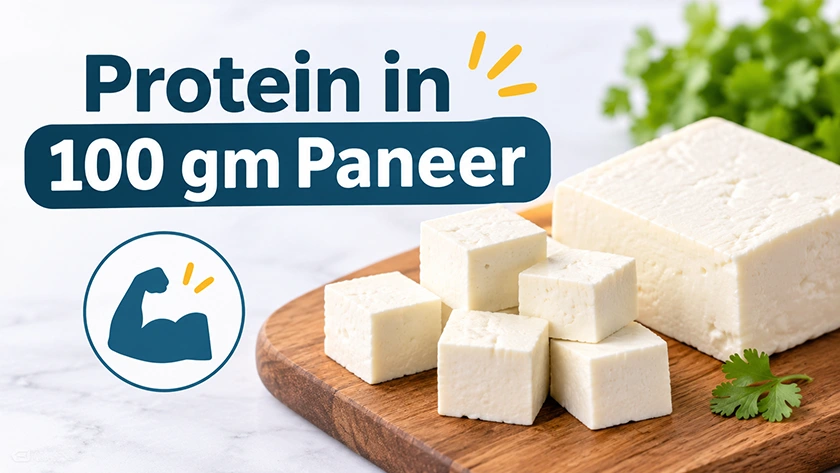
100 grams of paneer contains approximately 18.86 grams of protein, as given by the Indian Food Composition Table, 2017. However, certain websites and packaging labels have varying protein content, such as 18g, 20g, and even 25g. This is simply because of the type of paneer and milk used, its fat and moisture content, brand formula, and preparation (homemade or packaged).
While the daily requirement of protein is recommended to be 0.83 per kg of body weight per day, it may also vary with age, physical activity, fitness goal, gender, and more. Follow along to learn more about protein in 100 gm paneer, why it varies, how much protein to consume every day, and more.
Table of Contents:
How Much Protein Is in 100g Paneer?
100 grams of paneer contain approximately 18.86 grams of protein, according to the Indian Food Composition Table, 2017, published by the ICMR-National Institute of Nutrition (ICMR-NIN).
The exact figures are:
| Nutrients | Per 100 Grams |
|---|---|
| Protein | 18.86 grams |
| Energy | 1278 kJ (305 kcal) |
| Fats | 24.78 grams |
| Carbohydrates | 2.41 g |
| Moisture | 51.96 grams |
Important Note:
These figures only represent the reference composition of paneer based on samples collected from six regions of India, as stated in the IFCT report. The protein value varies by ±0.75 g across the samples.
This means those who are tracking their protein intake can use approximately 19 g of protein for every 100 g of regular paneer.
This 18.86 grams is a reference value, not a fixed nutritional value for every paneer product.
Important: Protein content in paneer also varies by type, moisture content, weight, and more.
Protein in Paneer Based on Paneer Type
While regular paneer has 18.86 g of protein, low-fat and homemade paneer protein varies from 18-24 g.
Here’s the protein in paneer based on different paneer types:
| Paneer Type | Protein (Per 100 Grams) |
|---|---|
| Regular | 18.86 g |
| Low Fat | 19-20 g |
| Homemade | 18-24 g |
| Malai Paneer (High Fat/ Full Cream) | 16-20 g |
| Tofu (Plant-Based Alternative) | 8-15 g |
Protein in Paneer by Weight
On average, 100 grams of paneer contains 18.86 g of protein, and hence, 50 grams contain 9.43 grams. However, the protein content also varied depending on the type of milk used and the preparation method.
Here is the breakdown table based on the IFCT 2017 reference value of 18.86 g protein per 100g:
| Paneer Quantity | Protein |
|---|---|
| 50g | 9.43g |
| 100g | 18.86g |
| 150g | 28.29g |
| 200g | 37.72g |
| 250g | 47.15g |
Note: Calculated from the IFCT reference value of 18.86 g/100 g.
These calculations are useful when measuring the paneer proportions, tracking macros, and planning a high-protein vegetarian diet.
This data answers questions like, “How much paneer equals 2 eggs?”
Where 100g of regular paneer provides 18.86 g of protein, the two medium-sized eggs provide approx. 12-13 g of protein.
Why Does the Protein Amount Vary?
The protein amount in paneer varies simply because of the type of paneer or milk used, its fat and moisture content, preparation method (homemade or packaged), and brand/formulation differences.
Different websites, nutrition apps, and paneer packaging may report 18g, others 20g or 22g, while certain high-protein products claim 25g per 100g. This difference usually comes down to how the paneer is made and how much protein concentration is available in the finished product.
Here are the main reasons for it:
1. Regular vs. High-Protein Paneer
Regular paneer is made by curdling milk and then separating the solid curds from the liquid whey. Its protein content is linked to the milk’s composition and how much moisture remains in the final product.
High-protein paneer is mainly formulated to provide more protein per 100g. Manufacturers may use other add-ons like milk protein concentrates, additional milk solids, etc to increase the protein concentration.
Here is how the reported values compare:
| Paneer type or reported value | Protein per 100g |
|---|---|
| Regular paneer (IFCT reference) | 18.86g |
| Paneer reporting 20g | 20g |
| Paneer reporting 22g | 22g |
| High-protein paneer reporting 25g | 25g |
These are just examples of protein values, not universal averages of each category.
2. Fat and Moisture Content
- Lower Moisture Content: Gives higher protein because less water is retained, and hence nutrients are densely packed in each gram.
- High Moisture Content: Gives comparatively lower protein because water contributes to the overall weight without adding protein.
- Higher Fat Content: Full-fat paneer has a greater proportion of milk fat, which contributes to its overall weight and reduces the overall proportion of protein.
- Low Fat Content: Low-fat paneer is made with toned or skimmed milk and hence, removing some of the milk fat can increase the proportion of protein, especially when moisture is also controlled.
*Low-fat does not automatically mean high-protein. Always compare the protein and fat values on nutrition labels.
3. Milk Source: Cow Milk vs. Buffalo Milk
Paneer made with buffalo milk has more protein than paneer made with cow milk, as they differ in their fat, protein, and total solids content.
According to IFCT 2017:
- Whole cow milk contains approximately 3.26g protein per 100g.
- Whole buffalo milk contains approximately 3.68g protein per 100g.
According to ResearchGate’s technological study of Paneer prepared from Cow, Buffalo, mixed, and standardized milk, the protein in paneer made from buffalo milk is slightly higher than paneer made from cow milk.
Here’s a comparison table:
| Nutrients | Cow Milk | Buffalo Milk |
|---|---|---|
| Protein (%) | 2.611 | 2.74 |
| Fat (%) | 3.41 | 6.92 |
| Lactose (%) | 3.91 | 4.09 |
Since buffalo milk contains more total solids, it can produce higher paneer yields.
4. Homemade vs. Packaged Paneer
Homemade paneer can have different nutritional values depending on the milk and preparation method.
For example, full-fat buffalo milk may add different nutritional values to paneer when compared to toned cow milk.
Use this approach when calculating your protein intake from paneer:
- Homemade paneer: Use 18.86g per 100g as a general IFCT reference.
- Regular packaged paneer: Follow the nutrition label.
- High-protein paneer: Use the specific protein value mentioned on the packaging.
5. Brand/Formulation differences
Not all brands use the same milk composition or manufacturing process. Some brands provide soft, moisture-rich paneer, while others produce firmer paneer varieties.
A few brands may contain additional milk solids or protein ingredients. This is why one brand may report 18g of protein per 100g while another reports 22g or 25g.
100g Paneer vs. a Paneer Dish
Protein in 100 grams of paneer vs. a paneer dish varies simply because of the other ingredients used in making a dish, such as gravy, oil, butter, cream, spices, and vegetables. A standard serving (250 grams) of a paneer dish might only contain 50-80 grams of paneer, and hence, there is a reduction in the paneer content.
Here’s what affects the protein content in 100 grams of paneer vs. a paneer dish:
- Hidden Fats and Calories: Most paneer dishes, like paneer butter masala, shahi paneer, or kadhai paneer, contain onion and tomato gravy, cream, butter, and cashew paste, which increase the fat content, while protein remains the same.
- Quantity of Paneer: A standard serving of home-cooked paneer dish (250 grams) may contain only 50-80 grams of protein, in contrast to raw 100 grams of paneer, reducing the overall protein content.
- Cooking Method and Recipe Variation: Although cooking does not destroy paneer’s protein, it may affect it due to the paneer-to-gravy ratio, added ingredients, water, or milk.
These are some reasons why people may calculate the paneer protein incorrectly; they often confuse the weight of plain paneer with the weight of a cooked paneer dish.
Example:
Suppose 300 g of paneer curry is made using 150g of plain paneer. The total protein from the paneer will be approximately 28.29 g (as per 150 grams of paneer used).
Due to adding gravy, oil, vegetables, and other ingredients, the finished dish weighs more than 150g, but the protein concentration will be lower per 100g.
Useful Tip: If you track macros, calculate the protein from the actual amount of paneer used in the recipe rather than just assuming every 100g of paneer curry contains 18.86g of protein.
While choosing to eat nutritious food at any restaurant, consider options with paneer, as it is protein-rich and keeps you full longer.
How Much Protein Do You Need Per Day?
The adult protein RDA is approximately 0.83 per kg of body weight per day, as given by ICMR-NIN 2020 recommendations. The reference values are 54g for a 65kg adult man and 45.7g for a 55kg adult woman.
The daily protein requirements, however, also depend on various factors, such as body weight, age, physical activity, health status, and fitness goals.
Here are a few examples using the 0.83g/kg reference:
| Body Weight | Approximate Daily Protein Requirement |
|---|---|
| 45 kg | 37.35 g |
| 50 kg | 41.5 g |
| 55 kg | 45.65 g |
| 60 kg | 49.8 g |
| 65 kg | 53.95 g |
| 70 kg | 58.1 g |
| 75 kg | 62.25 g |
Important Note:
These calculations are based on the general adult RDA. Physically active people or those with specific health conditions may need individual guidance.
Use an accurate calculator like the RealHealthio Macro Nutrient Calculator to estimate your daily calories and micronutrient intake.
It can also help you compare different protein sources, such as paneer vs. chicken. If you compare paneer vs. chicken protein, then chicken breast generally provides more protein (27-31 g) per 100 g as compared to 18-19 g in paneer.
Hence, make informed choices based on your dietary preferences and nutritional needs with the Realhealtio Macro Nutrient Calculator.
Conclusion
The protein in 100 gm paneer is 18.86g according to credible sources like FCT 2017 (ICMR-NIN). However, continuously seeing figures like 18g, 20g, 22g and 25g figures online or on product packaging can be confusing. They are generally based on factors like moisture, milk source, fat content, and formulation.
To accurately calculate the protein in 100g of paneer, use IFCT references as a starting point. Check the nutrition label to get an accurate estimate of the protein and other nutrients you are ingesting.
FAQs
How much protein is in 100 gm protein?
Which is healthier: 4 eggs or 100 grams of paneer?
4 whole eggs generally offer more protein (24-25 25 g) than 100 grams of paneer (18.86 g protein).
Why does protein in paneer vary?
The protein in paneer varies because of factors like paneer type and the milk used in preparation, fat and moisture content, brand formulation differences, and preparation method.
Can I eat 100 grams of paneer daily?
Yes, you can eat 100 grams of paneer daily if it fits into your regular calorie intake and diet.
Can I eat 200 grams of paneer daily?
Yes, you can eat 200 grams of paneer daily, provided it fits into your daily nutrient intake and physical activity.



Related Posts