1 medium roti (40 grams) contains approximately 80-120 calories, depending on the flour type, size, added fats (ghee/oil), thickness, and preparation method.
1 Roti and 1 Chapati Calories: Understanding the Number On Your Plate
1 chapati and 1 roti (medium-sized, 40 grams) have approximately 80-120 calories. However, the final calorie count varies by multiple factors, such as the type of flour used (millet-based, multigrain, whole wheat, etc.), size (small, medium, large), thickness, flour quantity, preparation methods, and added fats (ghee or oil). Roti and chapati are two names used interchangeably for the same Indian flatbread, and their nutritional values are similar.
According to ScienceDirect, in India, 90% of wheat is consumed in the form of chapatis, making rotis a staple food. Hence, understanding the numbers on your plate becomes crucial to manage daily calorie intake and make informed dietary choices. Follow the article to learn more about 1 roti calories, nutritional values, and more.
Table of Contents:
- What Is a Roti? What Are the Benefits of Eating a Roti?
- How Many Calories Are in 1 Roti or Chapati?
- Why Do Roti and Chapati Calories Vary?
- Roti and Chapati Calories By Quantity
- Roti and Chapati Nutrition Values and Facts
- How Many Rotis Should You Eat In a Day?
- How to Burn 1 Roti Calories (40 grams)?
- Who Should Avoid Consuming Rotis and Chapatis?
- Best Practices To Make Your Rotis Healthier
- Wrapping Up!
- Frequently Asked Questions (FAQs)
What Is a Roti? What Are the Benefits of Eating a Roti?
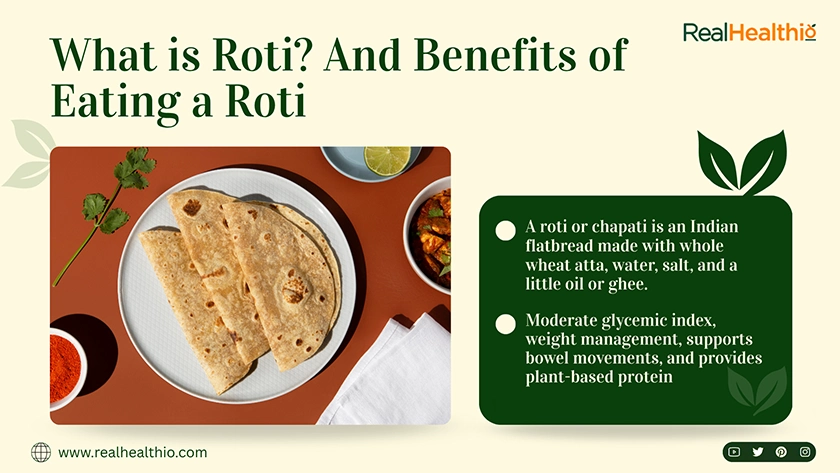
Originating in the Indian subcontinent, a roti or chapati is an Indian flatbread made with whole wheat atta, water, salt, and a little oil or ghee. The dough is rolled into small, thin circles, cooked on a flat tawa, and then usually finished over an open flame until it puffs up.
A staple food across South Asia, parts of Africa, and Southeast Asia, roti is usually paired with dal, cooked vegetables, curd, curries, and sabzis (vegetable dishes).
What Are The Benefits of Eating a Roti?
- Wheat roti has a low to moderate glycemic index, which prevents sharp blood glucose spikes, making it diabetes-friendly.
- Chapati supports weight management, as it is rich in fibre and carbs, which keeps you full longer, preventing overeating and snacking.
- Whole wheat flour has dietary fiber, which supports bowel movements and prevents constipation.
- Roti’s plant-based protein aids tissue repair, muscle growth, and immune function.
- Chapati can be made using various flour types, including millet-based, rice-based, multigrain, oats, and more, making them nutrient-dense and a great part of an everyday routine.
How Many Calories Are in 1 Roti or Chapati?
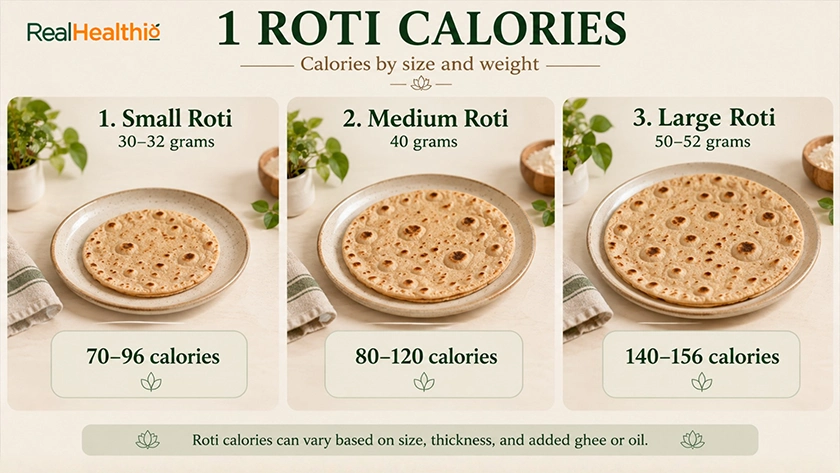
1 medium-sized plain wheat roti or chapati (approximately 30-40 grams) typically contains 80-120 calories, depending on various factors, including size, flour quantity, thickness, and preparation method. 1 roti and 1 chapati are the same type of Indian flatbread, so they have broadly similar calories.
1 Roti or 1 Chapati Calories Based on Size
| Roti Size | Approximate Weight | Estimated Calories |
|---|---|---|
| Small | 30-32 grams | 70-96 calories |
| Medium | 40 grams | 80-120 calories |
| Large | 50-52 grams | 140-156 calories |
*These are estimated values and not universal figures. Flour brands, preparation method, and ghee/oil used can significantly affect the final calorie count.
1 Roti or 1 Chapati Calories Based on Flour Type
| Flour Type | Calories (per 40 grams, medium-sized) | Key Benefits |
|---|---|---|
| Whole Wheat (Atta) | 120 |
|
| Jowar (Sorghum) | 112 |
|
| Bajra (Pearl Millet) | 118 |
|
| Makki (Corn) | 116 |
|
| Ragi (Finger Millet) | 114 |
|
| Besan/Missi | 130 |
|
| Oats | 105 |
|
| Multigrain | 110 |
|
*These are approximate values and not universal figures. Use of ghee/oil in preparation can affect the overall final calorie count.
Why Do Roti and Chapati Calories Vary?
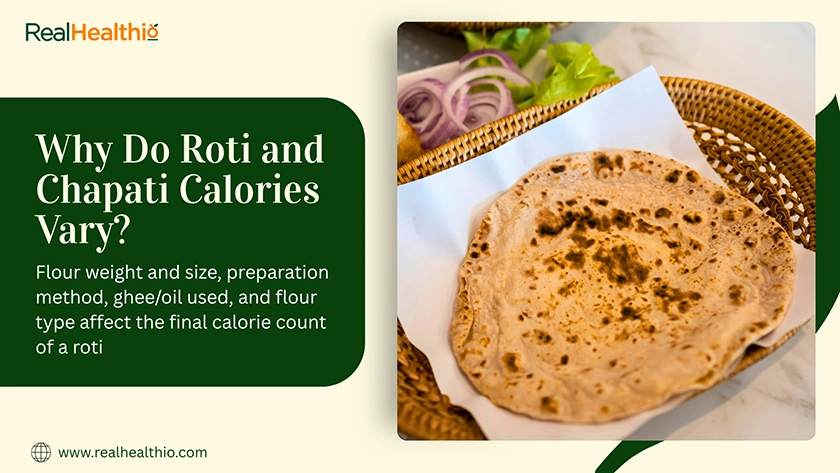
Flour weight and size, preparation method, ghee/oil used, and flour type affect the final calorie count of a roti or chapati.
Here are some factors you must know that affect the calorie count:
1. Weight and Size
Larger and thicker rotis contain more flour and therefore more calories.
- Small Roti: 70-96 calories (30-32 grams)
- Medium Roti: 80-120 calories (40 grams)
- Large Rotis: 140-156 calories (50-52 grams)
2. Oil/Ghee
Adding ghee/oil increases added fats and hence more calories. According to the US Department of Agriculture, one teaspoon of ghee (approximately 5 grams) contains about 45 calories.
For Example:
If you take a medium-sized roti (40 grams), which has 100 calories, then it may provide around 145 calories when a full teaspoon of ghee (5 grams) is added.
3. Type of Flour
Wheat and other grain-based rotis have different nutritional profiles. For example:
- Wheat-based rotis: used commonly, have 80-120 calories per 40-gram piece.
- Millet-flour-based: Ragi, bajra, and jowar have 112-118 calories per 40-gram piece, due to their different nutritional profiles.
- Multigrain Chapatis: Multigrain rotis have seeds, millets, and fibre mixes, which shift the calories to 100-105+ calories.
4. Preparation
Recipe and cooking method affect the final calorie count:
- Plain Roasted Roti, No Ghee/Oil: Plain roti cooked on a tawa with no added ghee or oil has low calories.
- Roti with Added Fat: One teaspoon of ghee has 45 calories, and it increases the total calorie count.
- Restaurant-styled Rotis: Restaurant-styled Rotis are often thicker and larger. They generally have added dairy, yogurt, or fats, which increase the calorie count.
- Added Ingredients: Ingredients such as greens (spinach and methi leaves), seeds (flaxseeds and sesame), or millets (jowar, bajra, ragi) can affect the final nutritional value.
Roti and Chapati Calories By Quantity
| Roti and Chapati Calories by Quantity | |
|---|---|
| Number of Rotis (Medium, 40 grams) | Calories |
| ½ Medium Roti | 60 |
| 1 Roti Calories | 120 |
| 2 Roti Calories | 240 |
| 3 Roti Calories | 360 |
| 4 Roti Calories | 480 |
| 5 Roti Calories | 600 |
Important Note: On a per-100-gram basis, 1 roti’s calories typically range from 290 to 300 calories. Adding a teaspoon of ghee/oil can affect the final calorie count.
Roti and Chapati Nutrition Values and Facts
Roti is one of the best low-calorie, healthy food options, which can be an everyday part of the meal.
Here’s what you need to know about its nutritional value:
| Nutrients | Amount (per 100 grams) | What It Means |
|---|---|---|
| Calories | 300 | Provide energy to support daily functions. |
| Protein | 7.85 | Supports muscle maintenance and tissue repair. |
| Carbohydrates | 46 | Fuels body energy and raises glucose levels. |
| Fats | 9.2 | Stores energy and supports immune function. |
| Fibre | 12.2 | Supports digestion and bowel movements and promotes satiety. |
Glycemic Index (GI) and Blood Sugar in 1 Roti/Chapati
According to the Dietary Guidelines for Indians by the National Institute of Nutrition, India, the glycemic index of roti is 62+3, which places it in a medium-GI category.
- Low GI: 55 or below
- Medium GI: 56-69
- High GI: 70 or above
A moderate glycemic index:
- Prevents sharp blood glucose spikes.
- Reduces the risk of type 2 diabetes.
- Has fiber, which keeps you full longer and supports weight management.
- Provides sustained energy and is an ideal part of everyday meals.
Important Note:
Even low-GI rotis can still increase your blood sugar when eaten in large quantities, as carbohydrate intake increases. Pairing roti with dal, vegetables, and curd can also influence the overall blood sugar response of your meal.
How Many Rotis Should You Eat In a Day?
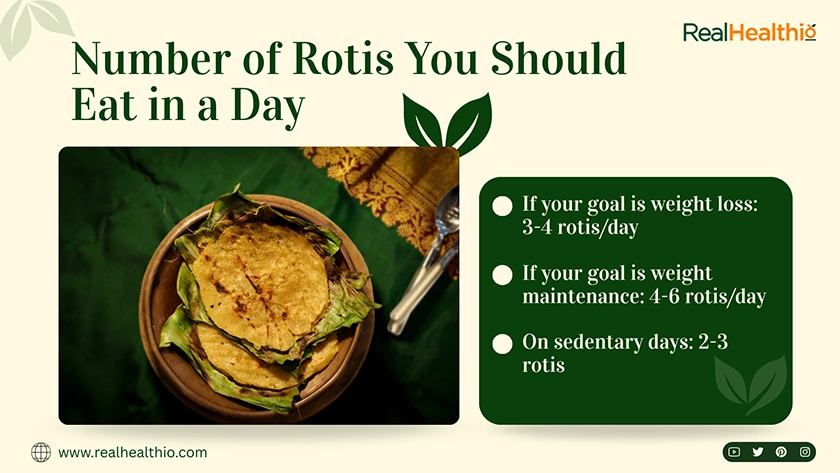
There is no universal number. The number of rotis you should eat in a day depends on your age, physical activity, gender, energy requirements, and overall diet. There is no single recommended number that can be applied to everyone.
Here’s what you can follow:
| Rotis You Should Consume As Per Your Goals | ||
|---|---|---|
| Goal | Number of Rotis | How to Consume |
| Weight Loss | 3-4 rotis/day |
|
| Weight Maintenance | 4-6 rotis/day |
|
| Sedentary Days | 2-3 rotis |
|
Here’s what you should keep in mind:
- Adjust the portions depending on your age, gender, physical activity, and energy requirements. Ensure healthy eating habits for better nutrition.
- According to the ICMR, National Institute of Nutrition, 250 grams of millets and cereals should be consumed per day, including all cereals and millets, and not just wheat roti.
- Pair rotis with curd, sabzi (vegetable dishes), and protein sources to make it filling and balanced.
- Consider the overall diet, as other cereals, like rice or bread, also contribute to the cereal intake.
How to Burn 1 Roti Calories (40 grams)?
Perform moderate-paced activities, such as brisk walking, light stretching, yoga, cycling, walking, and household chores, for at least 30 minutes to burn 1 roti calorie in a day.
- Moderate cycling for 20-25 minutes.
- Brisk walking for 25-30 minutes (4mph)
- Swimming at 2km/hr for 15 minutes.
- Yoga and Light Stretching for 30 minutes.
- Walk 3000-4000 steps.
- Perform household chores for 25-30 minutes.
Who Should Avoid Consuming Rotis and Chapatis?
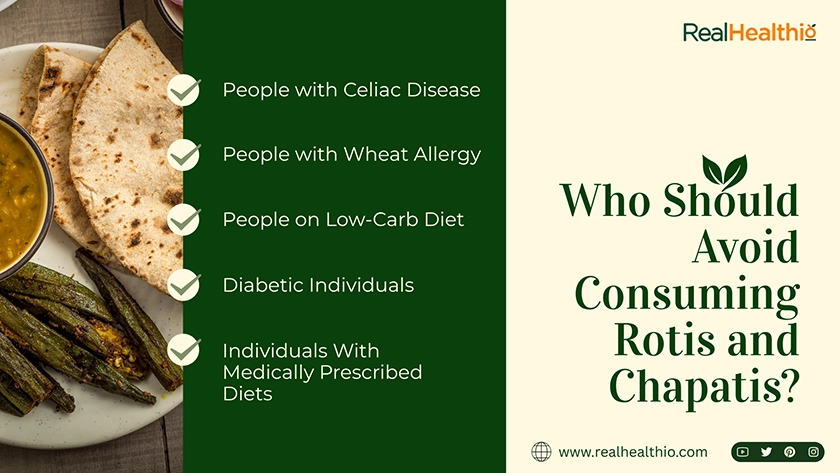
People with celiac disease, wheat allergy, or diabetes should avoid consuming chapatis. Similarly, individuals on low-carb, ketogenic, or medically prescribed diets should consult healthcare professionals before consuming chapatis.
- People with Celiac Disease: Traditional wheat roti contains gluten, which may harm people with celiac disease. It requires people to follow a strict lifelong gluten-free diet. Choose certified gluten-free alternatives, such as millet-based rotis.
- People with Wheat Allergy: Whole wheat can trigger allergic reactions in people with wheat allergy. Select suitable alternatives, such as besan/missi roti, millet-based flour rotis, and more.
- People on Strict Low-Carb and Ketogenic Diet: Wheat rotis have carbohydrates, which may disrupt the ketosis state or specific carb-restriction diet goals.
- Diabetic Individuals: Wheat chapati contains carbohydrates that are broken down into glucose, which can raise the body’s blood sugar levels. The best way to consume chapatis is to pair them with curd, dal, or cooked vegetables and monitor portion sizes.
- Individuals With Medically Prescribed Diets: If you have irritable bowel syndrome or other medical dietary restrictions, you may need to limit your chapati intake or choose suitable alternatives.
Important Note:
It is advised to consult a healthcare professional if you have a severe wheat allergy or a medically prescribed diet before consuming chapatis.
Best Practices To Make Your Rotis Healthier
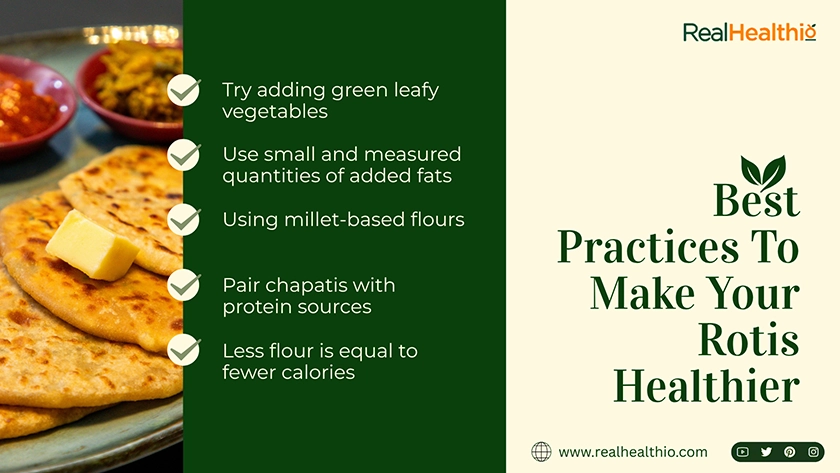
Make your rotis healthier by adding leafy vegetables to the dough, using millet-based flours, pairing chapatis with protein sources, and using small quantities of added fats.
- Try adding green leafy vegetables, such as spinach, methi leaves, grated carrot, or beetroot, to the roti dough to make it rich in iron, vitamins, minerals, and fibre.
- Use small and measured quantities of added fats, such as ghee, butter, or oil, to keep extra calories in check.
- Make your meal balanced by pairing rotis with curd, cooked vegetables, beans, dal, paneer, and other protein sources.
- If you are on a weight loss diet, the best way to make rotis is to keep them thin and small. Less flour is equal to fewer calories.
- Use whole-wheat flour instead of refined flour (maida) and try various millet-based flours, such as ragi, jowar, and bajra, to add more dietary fibre and nutrients to your meal.
Wrapping Up!
To sum up, 1 roti calories typically ranges from 80-120 in a medium-sized 40-gram chapati, although the exact quantity depends on various factors, including size, thickness, flour type, preparation method, and ghee/oil used.
The best way to consume a roti is to pair it with vegetables, curd, and protein-rich foods, such as dal and paneer, to make it a balanced meal. Rather than focusing entirely on calorie intake, consider portion sizes, nutritional value, and individual dietary needs.
Frequently Asked Questions (FAQs)
How many calories are there in 1 roti?
How many calories are there in 1 chapati with ghee?
A medium-sized chapati with one teaspoon of ghee contains approximately 150-160 calories. This can be reduced by applying ghee to one side or using less.
Are the calories in roti and chapati the same?
Yes, roti and chapati have the same calories, as they are the same kind of Indian flatbread, generally made of whole wheat. Both are prepared using the same methods and ingredients.
How many chapatis are equal to one bowl of rice in calories?
One standard bowl of cooked white rice (150 grams) has approximately 200 calories, which is equal to 1.5 rotis with added fats.
Does roti size affect calories?
Yes, a large and thick roti is made with more dry atta and whole wheat, which means increased calories, whereas a small roti (30-32 grams) is made with less flour, leading to a lower number of calories.
Is chapati okay for weight loss?
Yes, chapatis are ideal for weight loss because they are rich in protein and fibre. Rotis also support better satiety, which reduces midday cravings and prevents overeating.

Related Posts