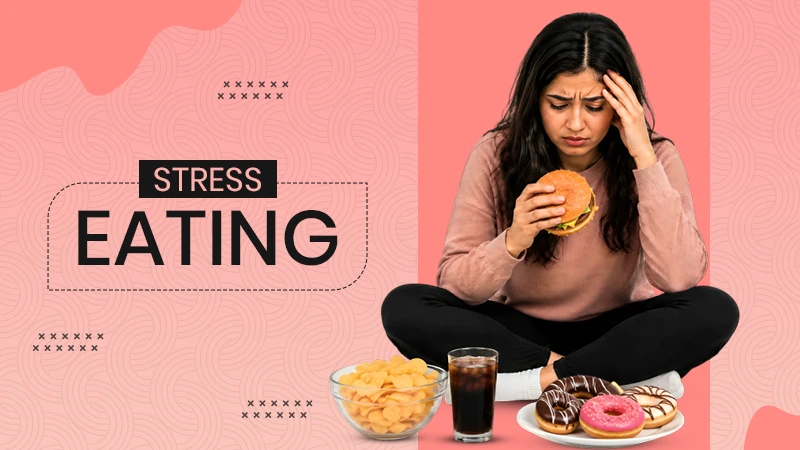
Stress-eating is often mindless eating because of emotional and psychological hunger to feel good. It leads to cravings for fast and fried foods and desserts.
Stress Eating: Why it Happens and How to Break the Cycle
Deadlines, work pressure, and academic stress are common nowadays, and everyone is dealing with such problems in their own way. For many people, these stress moments turn into cravings that lead to stress-eating. According to a study conducted by PubMed, it is concluded that nearly 64% of people who experience stress were emotional eaters. This raises a serious health concern not only in India but worldwide.
And if you are also on the list of stress eaters, then this article will guide you to explore the reasons behind stress eating and how to control it.
Table of Contents:
At a Glance
- Stress Eating happens when people eat because of emotional hunger.
- It happens because of stress, distress, or tiredness.
- Stress-eating can lead to cravings for fast food, snacks, and desserts.
- Cortisol and high insulin levels can lead to stress-eating.
- Stress-eating can lead to weight gain and major health problems.
Quick Answer: Stress-eating is eating food to feel good. It happens because of the hormone cortisol released by the adrenal gland. High cortisol levels increase the motivation to eat and cravings. Stress-eating can trigger major, serious concerns related to health. It can be controlled by reducing stress through meditation, exercising, replacing sugary cravings with fruits, and getting proper sleep.
What is Stress Eating?
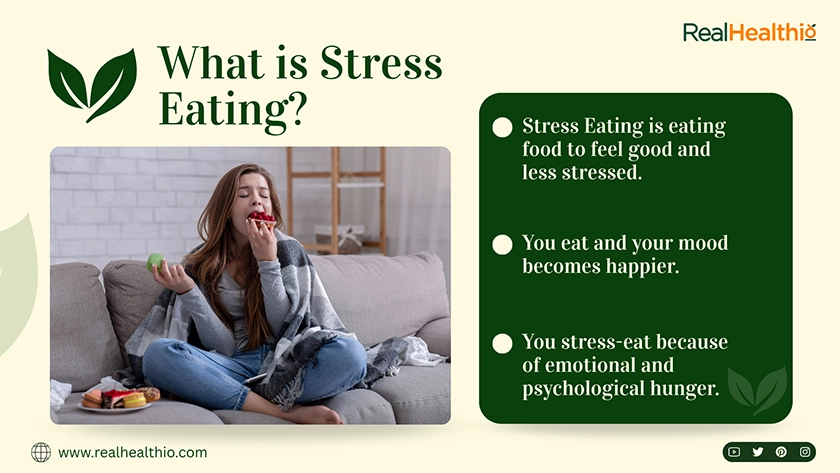
Do you also crave some junk and fast food when you are not feeling well? And in the process of feeling good, you order in bulk and overeat. If you relate to it, then you will understand the concept of Stress Eating.
Stress Eating is eating food to feel good and less stressed. And sometimes it helps; you eat, and your mood becomes happier. But most of the time, stress eating increases obesity and health problems. You stress-eat because of emotional and psychological hunger. And trust me, it’s worse for your health.
And if you are wondering why it is happening to you and how you can control this? So, you are not alone in this. Below are some reasons and ways to control stress eating.
Why Does Stress Eating Happen?
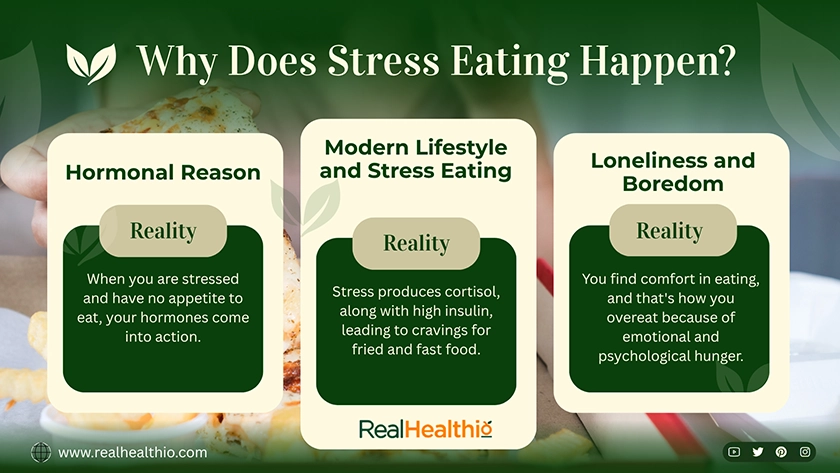
We are at that stage where we are questioning why stress eating happens, and surprisingly, there are factors that are contributing to it.
1. Hormonal Reason
When you are stressed and have no appetite to eat, your hormones come into action. It is proven that when you have no appetite, the nervous system sends signals to the adrenal glands to pump out the hormone adrenaline. The adrenaline hormone triggers the fight/flight response and puts eating cravings on hold.
But if the stress persists, then the same adrenal gland releases another hormone, cortisol. The cortisol increases the motivation to eat and cravings, and once stress levels fall, cortisol levels also fall. But if stress persists, then cortisol leads to overeating.
2. Modern Lifestyle and Stress Eating
One of the reasons that leads people to overeat is the modern-day lifestyle. Today we are all running for work and have big goals to achieve. And in this process, we take a lot of stress. Almost 50% of the elderly are suffering from high blood pressure and high insulin levels.
Stress produces cortisol, along with high insulin, leading to cravings for fried and fast food. High Insulin also leads to cravings for sweets and desserts. And you overeat.
3. Loneliness and Boredom
Have you noticed how sometimes, when you are lonely and getting bored, that stresses you. And you start eating to avoid your problems and loneliness, and not because of physical hunger. You find comfort in eating, and that’s how you overeat because of emotional and psychological hunger.
Signs of Overeating and Stress Eating
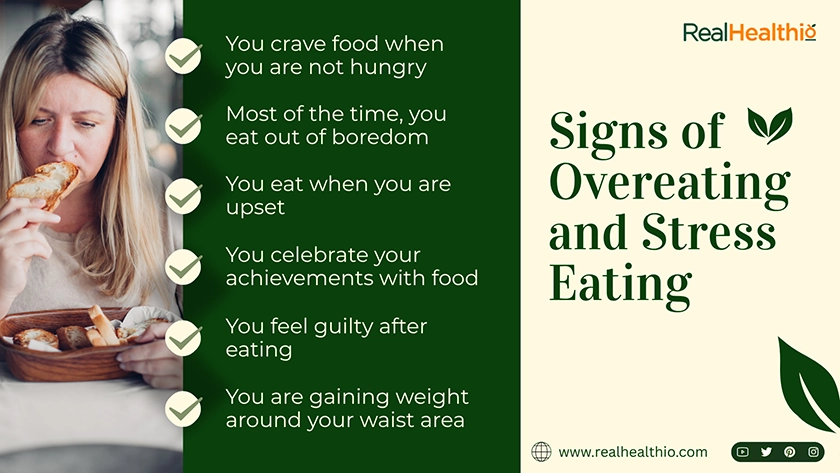
You don’t even realise whether you are stress-eating or not. Here are some signs that show you are stress-eating.
1. You crave food when you are not hungry
Have you ever felt like grabbing a snack even after you just ate? You crave your comfort food. This is a sign of stress eating, even when your stomach is full.
2. Most of the time, you eat out of boredom
Sometimes you eat just to pass the time. You check your kitchen, fridge, or order from outside when you’re bored. And if you relate to it, then you are probably eating because of emotional hunger.
3. You eat when you are upset
Whenever you are angry or have an argument with someone, you start eating food mindlessly. At that time, eating and food can be comforting, but it does not solve your problem.
4. You celebrate your achievements with food
Most of the time, you start treating yourself with food even after a little achievement. That does not mean you should not celebrate, but if every time you reward yourself with food, then it becomes a habit and enjoyment.
5. You feel guilty after eating
If after snacking or having a lavish dinner you often think “I probably shouldn’t have eaten it,” then it might be a guilty feeling that you overate and you are doing it consistently. Planning meals before going out and choosing healthy restaurants can help reduce impulsive overeating and reduce guilt.
6. You are gaining weight around your waist area
If lately you are feeling like your clothes are getting tighter, or you are gaining weight. Then maybe stress eating could be one reason. Weight gain can happen for many reasons, but according to a study by the National Institutes of Health, fat around the waistline and abdominal area happens because of stress-eating.
Ways to Control Stress Eating
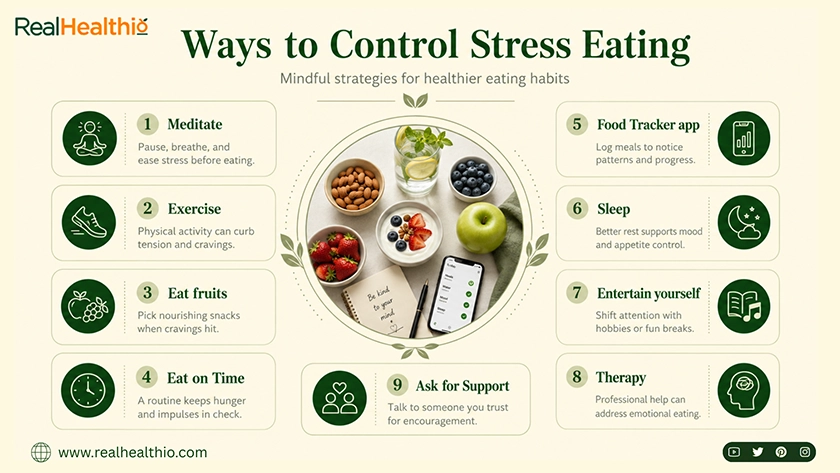
If you are stress-eating and gaining weight and want to control your overeating. Here are some ways you have to follow, and you can control your hunger and stress eating.
- Meditate: Many researchers have proved that by doing meditation, you can control stress. If Stress is controlled, you probably won’t stress eat. Also, meditation helps in controlling the mind and makes you more aware of your food choices.
- Gyming or Exercise: Cortisol levels also depend on body movement. If you exercise or walk, it can reduce the effects of stress.
- Eat fruits: If you are craving desserts and sugary food, try replacing it with fruits. They are healthy and full of vitamins and minerals.
- Eat on Time: No matter how busy you are, always eat 3 meals a day. Try adding salads and vegetables to your diet. Healthy eating also reduces stress.
- Food Tracker app: Download a food tracking app; it will help you count your calories.
- Sleep: Try to get proper 8 hours of sleep. It also reduces the impact of stress. If you work constantly, you will get fatigued and stress-eat.
- Entertain yourself: Try to take a break in between work and distract yourself from cravings. If you are getting bored, try to watch some movies or your favourite comfort show, or read. It will help you ignore your psychological cravings.
- Therapy: If you are stressed for a long period of time, try taking a break and getting some therapy. It will help you release your stress.
- Ask for Support: Don’t ignore the signs of depression and stress. Never hesitate to ask for support. Talk about your problems and issues with your friends and family.
Summing Up
We are living in a world where people are in a competition, not only with others but with themselves also. Everyone is struggling to become better, and in this process of becoming perfect, we are suffering from stress and overeating. But we have to keep in mind that to become a perfect version of ourselves, a healthy body is as important as a healthy mind.
Through regular exercise, sleep, and a proper diet, you can control your cortisol level and stress-eating. It just takes one step at a time.
Breaking the stress-eating habit does not happen overnight, but small steps matter. By understanding the signs and following a healthier habit, you can control stress-eating. For more reliable health and nutrition tips and lifestyle guidelines with evidence-based information, keep exploring RealHealthiO’s wellness resources.
Frequently Asked Questions(FAQs)
What is Stress-Eating?
How can I control stress eating?
Through mindful eating, proper sleep, and exercise, one can control stress eating. If you need help, do ask for help and therapies.
Which hormone is responsible for stress-eating?
Cortisol, secreted by the adrenal gland, is responsible for stress-eating. High insulin and cortisol levels lead to psychological hunger.
What are the signs of stress-eating?
Some signs of stress-eating are: when you are eating out of boredom or eating just to pass time. Also, if you are constantly gaining weight around your waistline, then it’s probably because of stress-eating.
What to eat during stress-eating?
When you are craving something just because of stress, then don’t eat mindlessly. You can eat dry fruits, avocado, whole wheat bread, eggs, fresh fruits, and salads. Try to cut sugar and include more fibre-rich food in your diet. It helps you control your cravings and makes you feel full.